September 25, 2026

Table of Contents
h2
Example H2
This is a div block with a Webflow interaction that will be triggered when the heading is in the view.
Introduction
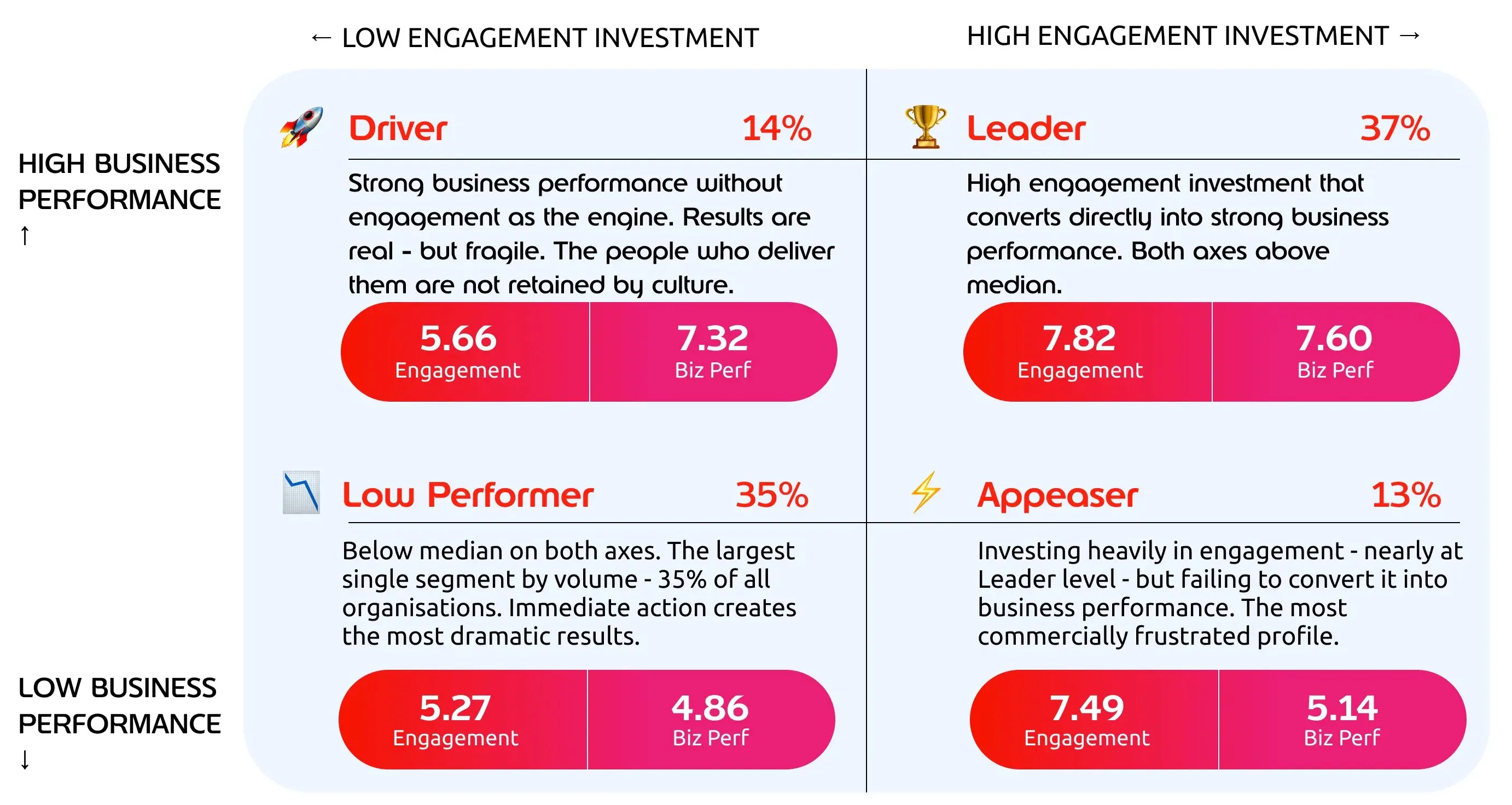
Employee engagement explains 36% of business performance variation - significantly more than most HR leaders realize, and certainly more than most CFOs believe.
But here's the catch: 13% of organizations invest heavily in engagement initiatives yet see minimal business impact.
According to Economic Value Study (EVS) data from 1,000+ organizations, what separates 'Leaders' (48% better performance) isn't effort or budget - it's the strategy, i.e., in turn the Employee Engagement Infrastructure.
The gap often starts with the platform choice.
Choosing an employee engagement platform is one of the most consequential HR technology decisions.
Get it right: Measurable improvements in retention, productivity, and satisfaction.
Get it wrong: Low adoption, fragmented data, and another underutilized tool + spending lakhs while attrition stays flat.
This guide assesses leading platforms in the Indian market through one lens: which platforms help you become a Leader.
Must-Have Features For Employee Engagement Platforms
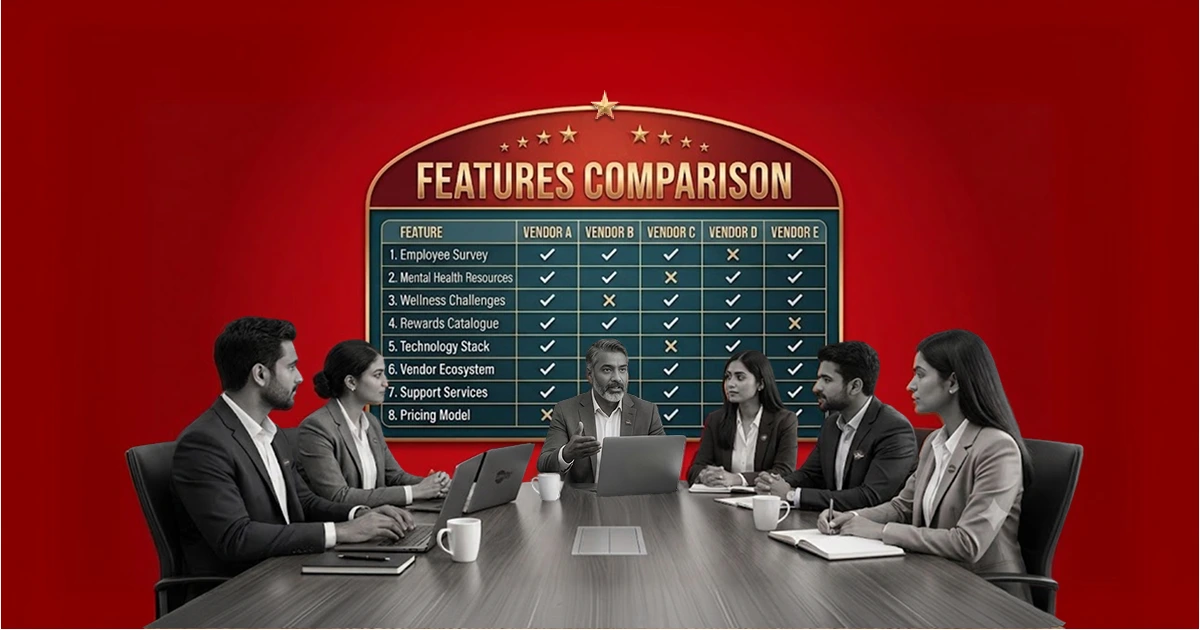
These ten features are the tactical manifestations of what engagement infrastructure looks like in practice. But features alone don't guarantee results; what separates platforms that deliver measurable business outcomes from those that become underutilized tools is whether these capabilities work as integrated infrastructure or disconnected point solutions.
Six architectural principles determine the difference: complete module coverage, unified integration, branded experience, personalization at scale, predictive intelligence, and global readiness. Discover how these 6 principles separate engagement infrastructure from programs →
9 Best Employee Engagement Platforms In India
1. Edenred
What It Is:
Edenred India is part of the global Edenred Group - a leading digital platform for employee benefits & engagement, mobility and B2B payments connecting 60 million users and 2 million partner merchants across 45 countries.
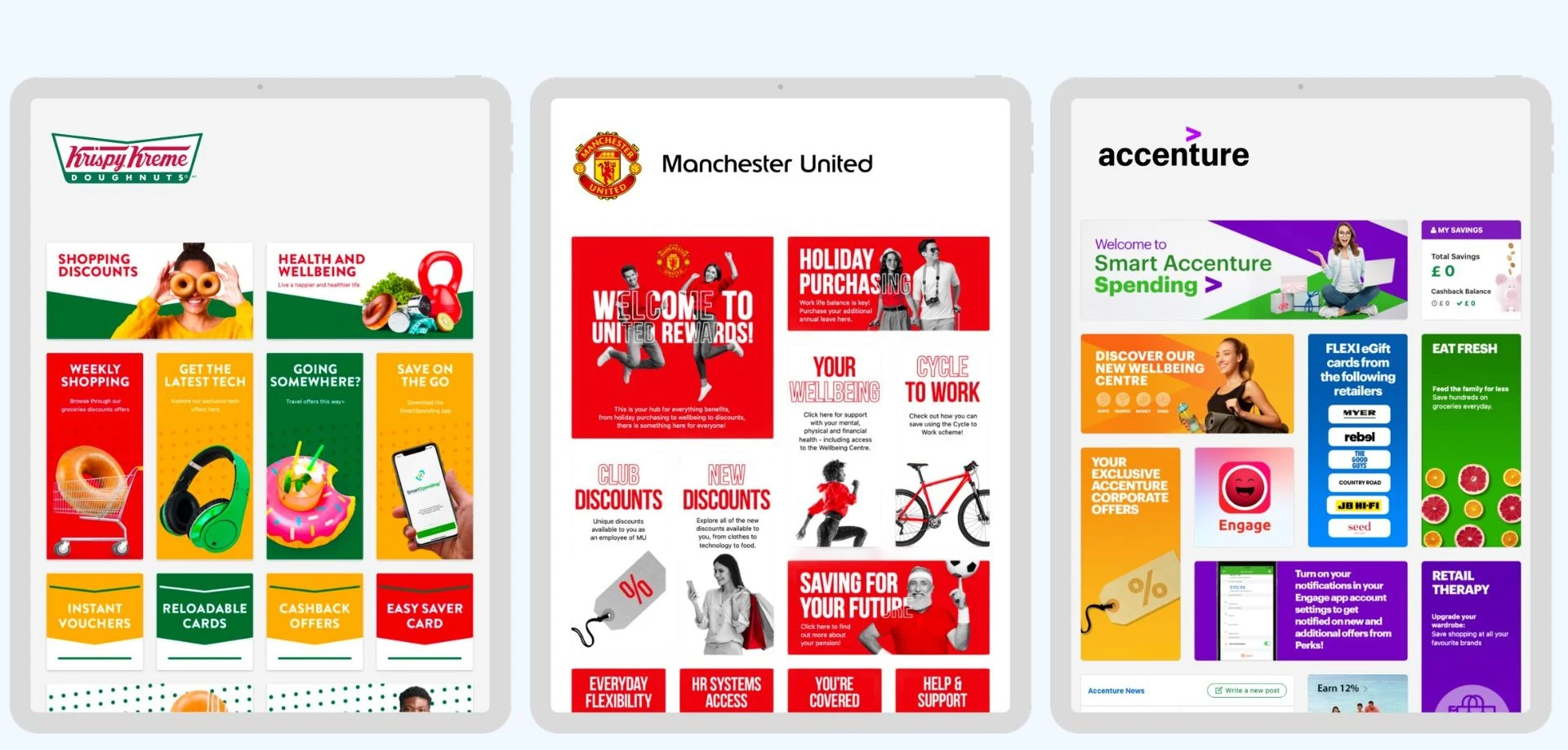
In India, Edenred brings EngagementOS - a comprehensive platform unifying recognition, rewards, pulse surveys, communication, and wellness, along with SmartHub - a unified SSO portal connecting all HR and enterprise systems into one branded experience.
Who It Fits:
Mid-market to enterprise organizations (1,000-10,000+ employees) needing to consolidate 3-5 fragmented engagement tools, particularly where deep customization and seamless integration with existing HR stacks matter.
Standout Capability:
- Unified experience: While many employee engagement vendors claim comprehensive platforms, most of them lack critical modules or require separate apps. Edenred delivers every engagement capability (recognition, surveys, wellness, communication, rewards) in a single, unified EngagementOS architecture - not a collection of bolt-on tools.
- Employee segmentation (Rule Engine for every module): Deliver relevant engagement experiences to every employee based on demography, role, location, department, and more. Without dynamic personalization, all employees see the same experience, limiting relevance and individual impact.
- Bi-directional single sign-on architecture: A completely custom-made landing page that connects payroll, HRMS, engagement tools, etc. Edenred can ingest APIs from all your existing systems OR be ingested by them - true bi-directional data flow. Whether your HRMS is the hub or you want EngagementOS to be the hub, the architecture supports both models. Employees access everything through one login, one consistent interface, one app.
- UI camouflage: Full white-label capability that includes (in addition to logos, colors and text modifications) custom UI/UX, configurable workflows, custom modules, building a comprehensive employer-branded experience. Employees see "MyCompany Hub", not "Powered by Edenred". Implementation takes 7 days and requires limited technical expertise.
Limitations:
- No native WhatsApp channel for deskless workers: There is no native WhatsApp bot or SMS interface, which can be a barrier for blue-collar or distributed workforces in manufacturing, retail, or logistics where WhatsApp is the primary communication tool. That said, the Engage mobile app offers a strong alternative access point for remote and deskless workers, letting frontline and field employees without corporate email log in and stay connected on the go.
- Made for medium to large companies: The platform's scope and cost structure are optimized for mid-to-large organizations. Companies with fewer than 100 employees may find the pricing disproportionate to their needs and budget.
- No self-serve option: Edenred does not offer a self-service tier. All deployments require custom solutioning and pricing based on the organization's requirements. While this ensures tailored solutions, it adds time to the decision-making process for teams that prefer to evaluate software independently before engaging with sales.
- Structured onboarding required: Realizing the full value of the platform requires a dedicated implementation period. Expect a multi-week setup phase involving configuration, integrations, employee communication and adoption planning.
Verdict:
Strongest choice when replacing 3-5 point solutions with one platform, when white-label branding matters to employer brand strategy, when you need enterprise capabilities without enterprise-length implementation, and when measurable outcomes (retention, engagement scores, stress reduction) drive HR team performance evaluation.
See it in action: In a 30-minute demo, we'll show you how EngagementOS consolidates your current stack, what your custom-branded employee hub would look like, and how bi-directional SSO works with your existing HRMS - using your actual use case, not generic slides. Book a personalized demo →
2. Advantage Club
What It Is:
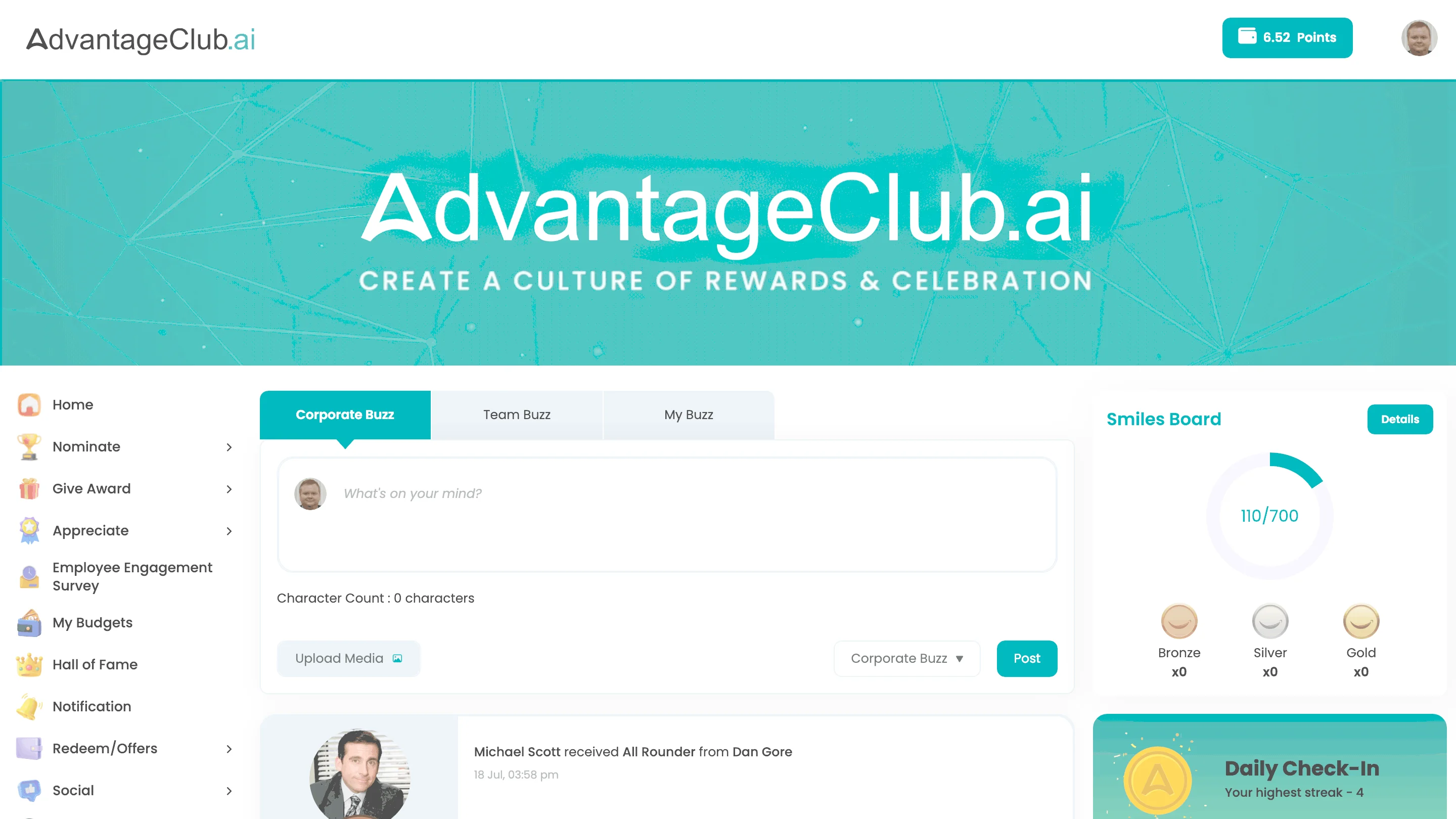
India-built, AI-powered employee engagement platform covering rewards & recognition, wellness, flexible benefits, perks, surveys, sales incentives, and loyalty programs.
Who It Fits:
- Mid-to-large organizations (1,000-10,000+), particularly cost-conscious companies seeking feature-rich solutions.
- Organizations with internal HR and IT capabilities that can manage self-serve deployment, drive adoption independently, and train staff and managers regularly.
Standout Capability:
- Unified experience: Runs recognition, rewards, wellness, surveys, and communities in one app rather than separate modules across disconnected tools
- Extensive global rewards marketplace: 10,000+ brand partnerships across shopping, dining, travel, wellness, and experiences, with local redemption in 100+ countries - one of the broadest catalogues for India
- Conversational AI assistant: ADVA AI enables managers and employees to give awards, redeem points, and access wellness benefits through natural language interactions
- Tax-efficient benefits layer: Offers Advantage Meal Card and flexible benefits wallets (fuel, telephone, child education allowances), enabling employees to structure their taxable income under Indian tax laws
- Multi-entity billing: Handles complex organizational structures with separate legal entities, currencies, and country-specific catalogues under one program
Limitations:
- Self-serve implementation without advisory: While the flat-fee, self-serve model removes procurement friction and enables faster rollout, organizations without dedicated internal change management resources may experience lower adoption rates. The model assumes HR teams will independently drive engagement campaigns, train managers, and monitor utilization without hands-on advisory support from the vendor.
- Branding customization is surface-level: White-labelling is limited to company logo, brand colors, and custom domain. Organizations requiring deep UI/UX customization such as:
- redesigning navigation architecture
- creating custom module layouts
- building a proprietary employee hub that feels entirely native
will find the branding capabilities insufficient.
The experience remains recognizably Advantage Club with your brand applied, rather than a fully custom-designed environment.
- No employee segmentation rule engine: While ADVA provides AI-driven personalization (automated nudges, personalized content recommendations, marketplace suggestions), the platform lacks a sophisticated, admin-configurable rule engine for segment-based targeting.
HR teams cannot create complex conditional logic such as "show this wellness benefit only to employees in APAC earning above X salary band" or "restrict this reward category to sales teams who hit Q3 targets".
The AI personalizes reactively based on usage patterns, but proactive, rules-based segmentation by department, geography, tenure, or performance tier is not available at enterprise depth.
Verdict:
A strong choice if you need a cost-effective, all-in-one engagement platform with a robust perks and rewards marketplace and want to avoid vendor lock-in through multiple apps.
Best suited for mid-to-large organizations (1,000–10,000+ employees) with internal HR/IT capacity to drive adoption independently, particularly those operating across multiple legal entities and prioritizing an all-in-one employee experience over deep UI customization or hands-on advisory support.
3. Empuls (By Xoxoday)
What It Is:
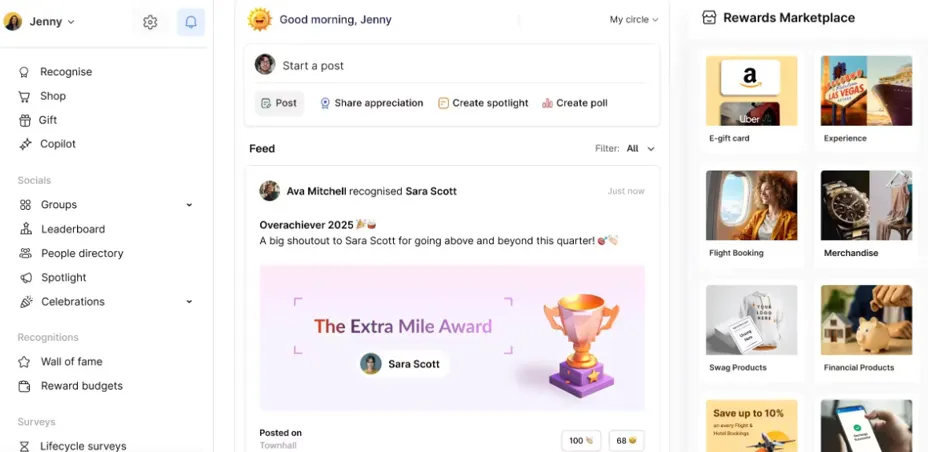
Xoxoday is an AI-powered rewards, loyalty, and incentives platform. Three products, one global catalogue, and AI in every layer - so you can engage and recognize employees, drive sales teams, reward channel partners, win customers, and power merchant networks.
For this blog we focus on its employee engagement (Empuls) and rewards (Plum) capabilities.
Xoxoday provides recognition workflows, peer-to-peer appreciation, pulse surveys, eNPS tracking, social feeds, wellness benefits, and access to one of the world's largest rewards catalogues - featuring 10 million+ redemption options across 30+ categories in 150+ countries, with support for 40+ languages and 50+ currencies.
Who It Fits:
Mid-to-large-sized desk-based organizations (200–5,000+ employees) with distributed teams prioritizing global rewards catalogue breadth and geographic reach over deep segmentation or hands-on strategic advisory support.
Standout Capability:
- Global rewards catalogue breadth: Eliminates geographic friction in multi-country recognition programs. Over 10 million reward options across 30+ categories in 150+ countries, with localized redemption in 50+ currencies and support for 40+ languages.
The platform's cost-of-living Index feature ensures award parity across geographies, maintaining fairness when teams span countries with vastly different purchasing power.
- Multi benefit card: RBI-compliant prepaid card issued on RuPay platform with multi-wallet tax-saving flexible benefits including Meal Wallet, Books & Periodicals, Telecom Services, Fuel & Driver's Salary, extending recognition into daily financial wellbeing.
- Conversational AI Assistance: Em AI bot provides proactive nudges for recognition, birthday wishes, milestone celebrations, and survey completion. AI Copilot helps managers identify who to recognize, suggests award messages, and surfaces recognition gaps through real-time sentiment analysis
- Fast deployment: Self-serve setup without lengthy implementation projects
Limitations:
- Split product experience (Empuls + Plum): Xoxoday separates employee engagement (Empuls) and rewards infrastructure (Plum) into two distinct products. This creates friction in admin workflows - setting up campaigns in Empuls while managing budgets and catalogue curation in Plum - and requires pulling engagement metrics and redemption analytics from separate systems for consolidated ROI reporting. Organizations expecting a unified, single-pane-of-glass experience may find this split cumbersome, particularly when training managers or explaining the system to employees.
- Surface-level white-labelling: Customization is limited to logo, brand colours, custom domain, email and SMS layouts. Organizations requiring custom navigation architecture, redesigned module layouts, or proprietary employee hub that feels entirely native will find the branding capabilities insufficient.
- Depth for enterprise: Larger, global programs may want deeper advisory support. Without structured program design and handholding managers and employees through trainings, participation tends to drop after go-live without guided rollout and ongoing support and trainings.
Verdict:
A strong choice for desk-based, multi-country teams (200–5,000 employees) seeking comprehensive engagement capabilities deployed with modular flexibility, particularly when global rewards catalogue breadth, geographic reach, and multi-currency support matter more than adoption ease, deep UI customization, or hands-on strategic advisory.
4. O.C. Tanner
What It Is:
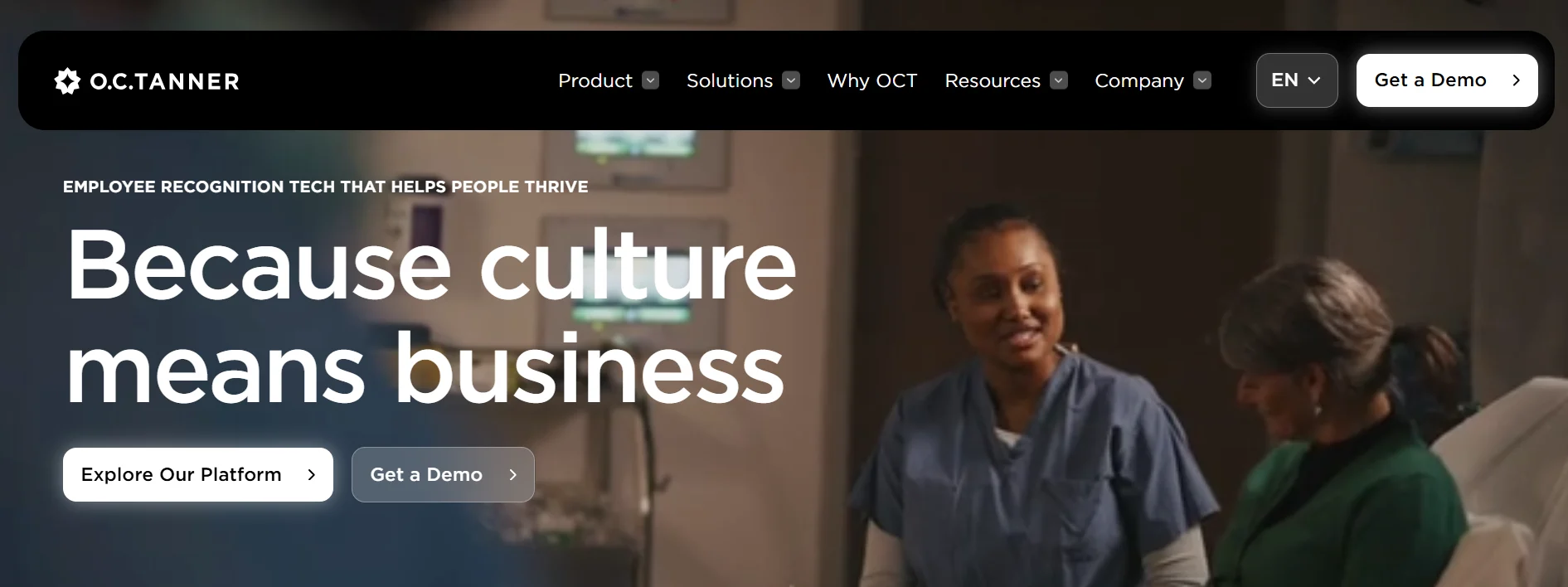
A 98-year-old enterprise recognition company whose Culture Cloud platform combines recognition, service awards, celebrations, and symbolic rewards with AI-powered culture analytics. Founded in 1927 as a class-ring manufacturer, O.C. Tanner has evolved into a global recognition leader.
Who It Fits:
Large, multinational enterprises (5,000–50,000+ employees) operating across various countries with a strong service-milestone culture such as celebrating 10-, 15-, and 25-year anniversaries with physical awards, not digital points.
Require deep HRIS/HRMS/HCM integration, consistent cross-border recognition, and white-glove implementations with dedicated account teams focused on symbolic recognition over engagement surveys or wellness programs.
Standout Capability:
- Unmatched service award & milestone recognition infrastructure: O.C. Tanner's 98-year heritage in physical awards delivers capabilities no pure-software competitor can match: in-house design team creating custom symbolic awards (rings, sculptures, plaques), 400+ premium brand partnerships (Apple, Tiffany & Co., etc.), and global fulfillment network serving 180 countries with engraving and white-glove delivery. Their Yearbook experience creates collaborative digital yearbooks for service anniversaries, combining digital excellence with physical craftsmanship for milestone moments requiring more than points.
- Offline & deskless worker solutions: Addressing 80% of the global workforce without desks through mobile-first QR code recognition, Manager Store for offline award ordering, SMS/WhatsApp notifications, and TV monitor recognition walls.
- Major unique recognition features: Beyond standard recognition, the platform enables employee-initiated success sharing, peer point amplification, and customer-to-employee recognition via QR codes. Multi-store functionality supports separate budgets for wellness, safety, and sales initiatives, while Lifestyle Spending Accounts and Mobile Device Management (Intune SDK/MAM) deliver flexible benefits and BYOD security for modern, mobile-first workforces.
Limitations:
- Recognition-first, not all-in-one engagement suite: O.C. Tanner excels at peer recognition, service milestones, and symbolic awards but lacks depth in dedicated platform capabilities: employee surveys (Pulse only), wellness programs (LSAs only), perks & discounts (limited merchants).
- Limited self-service & vendor dependency: Unlike self-serve competitors, O.C. Tanner requires vendor support for program setup, custom award design, store/budget management, reporting customization, and HRIS integrations - creating slower iteration (support tickets vs. instant updates), dependency risk (can't quickly adjust without vendor), and higher total cost of ownership.
- Premium Investment: Custom-quote-only pricing (estimated $200–350/employee/year total budget) means 5,000 employees = $1M–1.75M annual investment - excluding mid-market companies and misaligning with Indian budgets expecting $2–3/employee/month.
- India market gaps: Feature availability varies by region. Data residency and Indian language support not publicly stated.
Verdict:
Most established name on the list, and the strongest fit if long-service recognition is central to how your culture works. Recommended for: 10,000-person organizations/companies with several legal entities and operations in multiple countries, especially where service awards matter. Not ideal for organizations seeking comprehensive engagement measurement or fast, self-serve deployment.
5. Vantage Circle
What It Is:
India-built recognition and rewards platform with perks, a wellness product (Vantage Fit), and pulse surveys.
.webp)
Who It Fits:
Frontline, deskless and multi-country workforces (1,000-10,000+ employees) where the goal is sustained recognition behaviour rather than launching a platform and watching usage decay.
Standout Capability:
- Frontline accessibility: iOS and Android apps with WhatsApp recognition channels for deskless workers
- Physical gifting: Corporate gifting and onboarding kits - milestone moments extend beyond points and vouchers to tangible awards
- Indian HRMS integrations: Deep connections with India-specific platforms
- Deeper challenges model and health analytics: Gamified wellness challenges paired with detailed health data insights
Limitations:
- Fragmented user experience: Wellness and wellbeing features are housed in a separate app (Vantage Fit) rather than integrated into the core platform. This creates a disjointed experience where employees must toggle between multiple applications, reducing convenience and potentially hindering adoption of holistic engagement initiatives.
- Limited healthcare benefits integration: Vantage Fit focuses on wellness challenges and step tracking as its core offering. The platform facilitates annual health checkups, native OPD (outpatient department) coverage and Employee Assistance Programs through third-party partnerships on its marketplace, but it does not offer these as comprehensive, built-in platform features.
- Branding customization is surface-level: Branding is restricted to colour, logo and text adjustments rather than full white-label design. If your employer brand strategy requires the platform to look like "MyCompany Hub" rather than vendor software with your colours, this won't provide sufficient customization depth.
Vantage Circle doesn’t allow you to:- redesign the UI/UX architecture
- create custom module layouts
- build a proprietary employee hub that feels entirely native.
Organizations requiring this level of customization will find the branding capabilities insufficient.
Deep UI camouflage drives employee trust and adoption - workers engage more with tools that feel native to their company ecosystem rather than obviously third-party software.
Verdict:
Strongest India-built recognition option for frontline-heavy workforces where Gartner validation matters for procurement approval. Recommended for: 3,000-person manufacturers across six sites with mostly frontline staff where reach is the primary challenge. Expect to run this alongside a dedicated listening tool for comprehensive engagement measurement.
6. HiFives
What It Is:
Employee rewards and recognition platform with a few options for surveys and communications.
%20(1).webp)
Who It Fits:
Mid-sized organizations (200-1,000 employees), particularly those requiring multi-level approval workflows, jury-based evaluations, or specialized programs like Innovation Awards and Safety Recognition.
Standout Capability:
- Frontline accessibility: WhatsApp bot, mobile-first interface, and MS Teams/Slack recognition flows designed for non-desk workers in manufacturing, retail, and logistics
- Specialized recognition modules: Kaizen/Innovation Awards, Safety Awards, Spot Recognition with customizable nomination and approval workflows - rare depth for manufacturing and operations-heavy organizations
Limitations:
- Basic-level feedback and survey options: The platform primarily focuses on recognition and rewards, with fewer features for gathering employee feedback or measuring employee sentiment through surveys - lacking the depth of dedicated engagement platforms
- No wellness features: HiFives does not offer employee wellbeing and wellness initiatives (personalized health plans, mental health services, wellness booking, etc.), which are increasingly crucial to comprehensive employee engagement strategies
- Limited sentiment analysis and advanced analytics: While HiFives provides recognition dashboards and participation metrics, it lacks the sophisticated sentiment analysis and predictive analytics capabilities found in competitors
- Not ideal for enterprise-grade implementations: HiFives provides no explicit change management or adoption consulting - only platform training and support - meaning enterprises must budget for external change management resources. Combined with the lack of a unified HR Command Centre (employees still navigate multiple systems), absence of dynamic employee segmentation, and requirement for complementary tools to cover surveys, wellness, and discounts, HiFives functions as a recognition-first specialist requiring significant internal capability rather than a turnkey enterprise engagement platform.
Verdict:
Recognition-first specialist best suited for manufacturing and operations-heavy organizations (200-1,000 employees) that need specialized programs like Kaizen/Innovation Awards, Safety Recognition, and multi-level approval workflows. HiFives' standout strength is frontline accessibility - WhatsApp bot and mobile-first design make it uniquely effective for non-desk workers in manufacturing, retail, and logistics where competitors struggle. However, it's not an all-in-one engagement platform: you'll need separate tools for comprehensive surveys, wellness programs, and employee discount marketplaces. The platform requires significant internal capability to configure complex workflows and drive adoption (no change management consulting provided), making it unsuitable for organizations lacking dedicated resources or those expecting simplicity.
7. Benepik
What It Is:
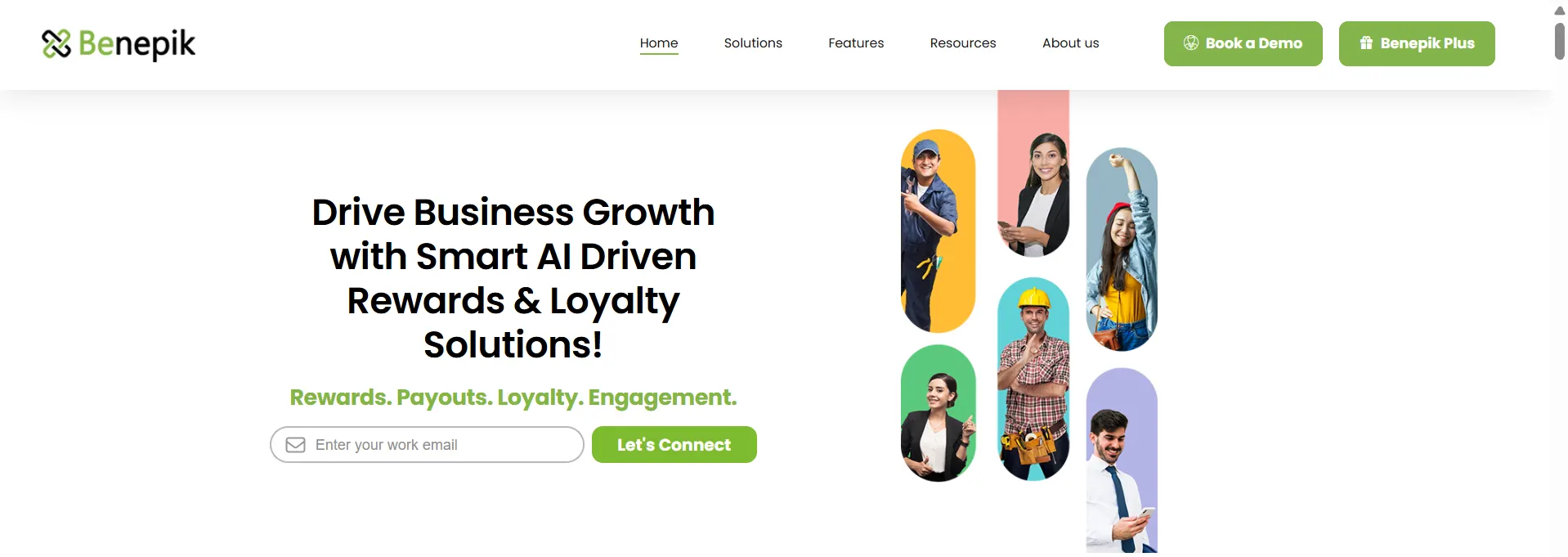
Rewards and recognition platform founded in 2015 and headquartered in Gurugram. Benepik positions itself as a stakeholder engagement platform covering employees, channel partners, and consumers.
Who It Fits:
FMCG and consumer goods companies (1,000-5,000 employees) that need unified reward programs across multiple stakeholder groups - employees, distributors, retailers, and end consumers instead of a comprehensive employee engagement platform.
Standout Capability:
- Multi-stakeholder reward architecture: Runs employee recognition, channel partner incentives, and consumer loyalty programs on one platform. This is particularly valuable for FMCG, consumer durables, and auto ancillary companies where distributor and retailer engagement drives as much business value as employee engagement
- Corporate gifts: Benepik offers a corporate gifting solution that enables organizations to manage bulk gifting campaigns for festivals, milestones, and special occasions across employees, channel partners, and customers. The platform provides curated gift catalogs, personalized gift selection options, and end-to-end logistics management including delivery tracking.
Limitations:
- Narrow functionality - RnR only, not holistic engagement: Benepik operates as a specialized rewards and recognition platform rather than a comprehensive employee engagement solution. It lacks critical modules that define modern employee experience platforms: employee surveys for listening and feedback, wellness and wellbeing programs, company communications tools, and HR analytics dashboards. Organizations cannot use Benepik to measure engagement, support employee health, communicate policies, or gain strategic workforce insights - requiring multiple additional tools to build a complete engagement ecosystem.
- No data-driven decision making capabilities: Without an HR Command Centre or advanced analytics dashboard, and lacking employee survey functionality, Benepik provides no mechanism for measuring engagement levels, tracking program ROI, analyzing workforce sentiment, or generating actionable insights. HR leaders cannot make data-driven decisions about their workforce strategies or demonstrate the business impact of their engagement initiatives.
- Absence of personalization and segmentation: The platform lacks a rule engine for employee segmentation, meaning organizations cannot create targeted experiences, customized reward structures, or personalized campaigns based on employee attributes like department, location, tenure, or performance. This one-size-fits-all approach limits the relevance and effectiveness of engagement programs across diverse workforce populations.
- No branding or white-labelling options: Without UI camouflage capabilities, companies cannot customize the platform's appearance to match their corporate identity and branding. This can reduce employee adoption rates and make the platform feel like an external tool rather than an integrated part of the company's culture and employee experience.
- Industry-specific design limits broader applicability: Benepik's multi-stakeholder architecture (employees, channel partners, consumers) is optimized for FMCG, consumer goods, and distribution-heavy industries. Companies in technology, professional services, healthcare, or other sectors may find the channel partner and consumer loyalty features irrelevant while missing the employee-centric capabilities they actually need - making it a poor fit outside its target verticals.
Verdict:
Best fit for FMCG, consumer durables, and auto ancillary companies that need one platform for employee recognition and channel partner incentives rather than separate systems. Not ideal for organizations seeking pure employee engagement depth.
8. EngageWith (by Springworks)
What It Is:
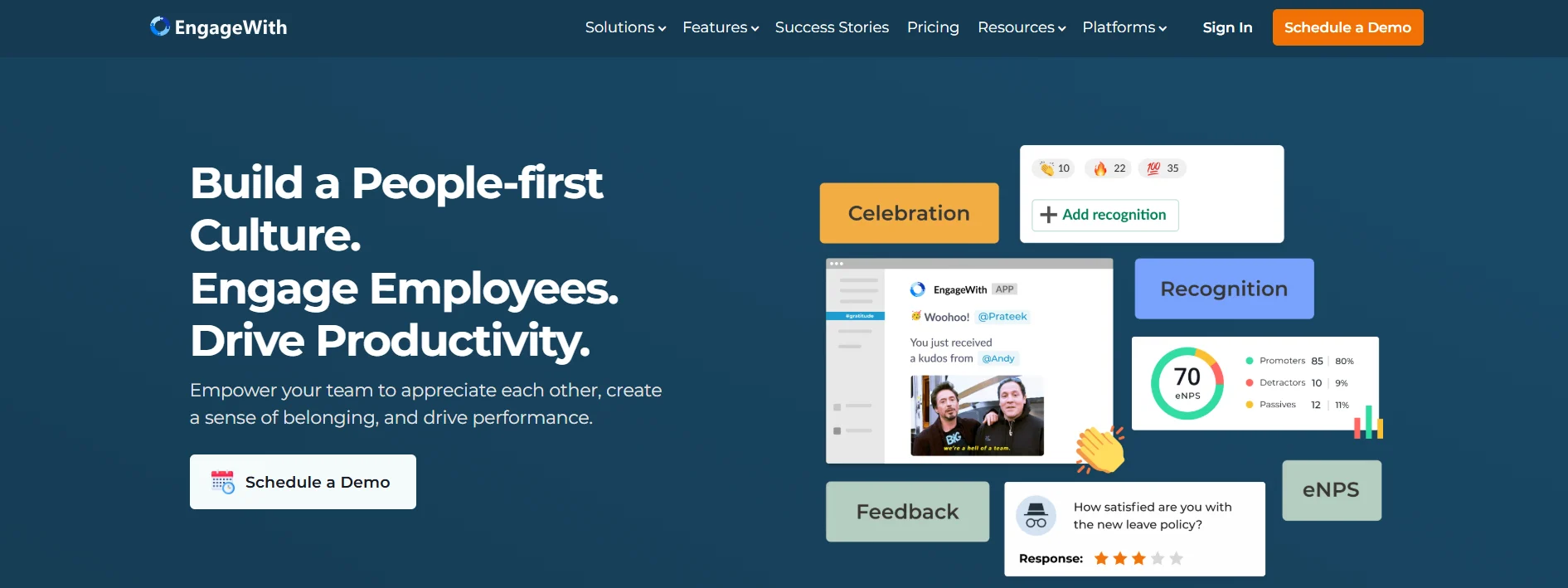
A Slack- and Microsoft Teams-native employee recognition and employee survey platform from Springworks, designed to make appreciation a natural part of daily workflow. Founded on a "recognition where work happens" philosophy.
Who It Fits:
Tech startups (100-1,000 employees) that live in Slack or Teams, have fully remote or hybrid workforces, and want recognition to feel like social media - instant, public, and frictionless - rather than formal HR processes
Standout Capability:
- Native Slack/Teams integration: EngageWith is built Slack-first. Employees give kudos, shoutouts, and awards without leaving their primary work interface. Recognition appears in channels, not buried in separate apps
- Pulse surveys in modal flow: Surveys appear directly in Slack modals for higher response rates without context-switching
Limitations:
- Slack/Teams dependency creates single point of failure: If your organization doesn't use Slack or Teams as a primary communication hub, or if frontline workers don't have access to these tools, adoption will collapse. No standalone mobile app means deskless workers are excluded
- Recognition-only platform: No wellness programs, no benefits administration, no comprehensive survey capabilities beyond pulse checks. You'll need separate tools for holistic engagement
- Limited enterprise depth: No multi-level approval workflows, no specialized recognition programs (safety, innovation), no complex budget management for large organizations with multiple entities
Verdict:
Strongest choice for tech startups (100-500 employees) that are Slack/Teams-native, fully remote, and want recognition to feel effortless and social.
Recommended for: 300-person SaaS startup where everyone lives in Slack and you want recognition to happen in the flow of work, not as a separate activity.
Not suitable for organizations with significant frontline workforces, those requiring comprehensive engagement measurement, or enterprises needing complex approval workflows and multi-entity budget management.
9. BI Worldwide India
What It Is:
The India arm of a global engagement solutions leader that has been operating since 1952. Provides technology-enabled loyalty and engagement solutions across employee recognition, channel effectiveness, and customer engagement.
For this blog we focus on its employee engagement capabilities.
Who It Fits:
Large enterprises (5,000-50,000+ employees) operating across multiple countries that need proven, research-backed recognition programs with white-glove service, particularly where behavioural science rigor matters for board-level justification
Standout Capability:
- Research-backed: BI WORLDWIDE India's recognition programs are built on proprietary research frameworks including "The New Rules of Engagement" which identifies 12 key strategies that drive employee commitment, effort, and inspiration worldwide. This isn't software with features - it's methodology with technology.
- Conversational AI assistant: The company's Elevate platform integrates IBM watsonx.ai to provide AI-powered recognition assistance, helping managers craft meaningful recognition messages, identify suitable nominations based on historical data, and mitigate bias in the selection process.
- Enterprise-grade learning solutions: Delivers AI-driven, automated learning journeys with intelligent course recommendations, 360-degree feedback loops, and advanced analytics.
Empowers rapid creation of interactive, mobile-responsive eLearning content without technical skills, using intuitive drag-and-drop tools to build multimedia-rich courses with gamification, branching scenarios, and multi-language support.
L•EARN LXP centralizes all organizational learning into a single, Netflix-style portal with personalized recommendations, social learning features, and on-demand access, eliminating scattered information and empowering self-directed development through an intuitive, consumer-grade experience that increases engagement and knowledge retention.
Limitations:
- Recognition-first, not all-in-One: While comprehensive in recognition and rewards, BI WORLDWIDE doesn't offer the full HR consolidation capabilities (HRMS integration, benefits administration, SmartHub-style SSO) that platforms like Edenred provide.
- Module depth varies: While employee engagement is a core strength, survey depth and wellness integration may not match specialized platforms focused exclusively on those areas.
Verdict:
The strongest choice for large enterprises (5,000+ employees) that need behavioural science-backed recognition programs with white-glove service, where research rigor justifies premium investment.
Not ideal if: You need a comprehensive employee engagement suite (Wellness, surveys, UI camouflage) and HR consolidation (HRMS integration, benefits administration, SSO portal).
HR Stacks That Have Employee Engagement Modules
Your existing HRMS/HCM/HRIS may have some engagement features - basic recognition, simple surveys, maybe a wellness module.
So why do dedicated employee engagement platforms exist?
HRMS/HCM/HRIS vendors build solid core infrastructure for payroll, compensation, and compliance, but engagement features like surveys, recognition, and wellness often lag in depth and capabilities. You get unified data and vendor simplicity, but engagement capabilities are afterthoughts rather than strategic priorities.
The hybrid reality (what most mid-to-large enterprises actually do)
HRMS vendors acknowledge that their engagement features aren't enough, so they create and include employee engagement as a separate segment in their HR Marketplaces, or partner with employee engagement suites to fill the gaps.
The most common approach isn't either/or - it's both:
Run your HRMS/HCM/HRIS for Payroll Processing, Attendance and Leave Management, Compliance and Statutory Reporting, and Performance Management
Layer a dedicated engagement platform for recognition and rewards, wellness programs, pulse surveys and feedback, and employee perks and benefits
The trade-off:
Real-World Scenarios: Finding Your Match
Not every platform works for every organization. Here are four common scenarios and the platforms that actually solve them.
Scenario 1: The Fragmented Stack
Profile: 1000+ employee companies running disconnected tools - legacy recognition, third-party EAP, separate HRMS. Spending lakhs annually. Engagement scores flat for 18 months.
The Problem: Tools work in isolation. No unified view. Employees juggle 5-7 logins.
Best Fit: Edenred
- All-in-one: Surveys, recognition, wellness, communication, rewards in one interface
- Bi-directional SSO: Connects HRMS, payroll, leave, CRM into one branded hub
- Employee segmentation: Personalized experiences by role, location, tenure
- Full white label: Employees see "MyCompany Hub," not vendor branding
Alternative: Advantage Club, for a unified platform, though it lacks extensive segmentation and white labelling capabilities.
Scenario 2: The Enterprise Seeking Best-in-Class Experience
Profile: 3000+ employee organizations where employer brand and wellbeing are strategic priorities. Current platform looks generic. Wellness is just a content library, not functional healthcare.
The Problem: Surface branding doesn't create a native experience. Can't book therapy or health checkups.
Best Fit: Edenred
UI camouflage: Redesign UI/UX, custom modules - not just logo/colours
Functional wellness: Book therapy, health checkups, EAP counselling, gym memberships, OPD coverage. Segmented offerings by employee demographics.
Alternative: Advantage Club or Empuls if the organization is comfortable with limited customization.
Scenario 3: The Frontline-Heavy Organization
Profile: 5,000-person retail/manufacturing with 4,200 frontline workers. Platform shows 82% adoption - but only from head office. Frontline participation: 11%.
The Problem: Platform assumes desk access. Frontline uses WhatsApp, not email.
Best Fit: Vantage Circle
- WhatsApp recognition
- Offline-capable mobile apps
- Physical gifting for tangible recognition
When Edenred fits better: When you need comprehensive employer branding and extensive customizations to build a brand-native interface.
Scenario 4: The Tech Start-up/Scale-Up
Profile: 400-800 person SaaS company that has grown 3x in 18 months. Lives in Slack/Teams. No formal platform. HR team of 4-8 stretched thin.
The Problem: Growth outpaced HR infrastructure. Informal recognition doesn't scale.
Best Fit: Benepik or EngageWith
Benepik: Self-serve setup, global reward options, fair recognition depth
EngageWith: Built Slack-first, recognition in channels, social design, pulse surveys in Slack modals
When Edenred fits better: Scaling to 1,500+ employees within 12 months. Edenred's SmartHub SSO, functional wellness, and dedicated support mean you build once and scale continuously - avoiding platform migration in 18 months.
The Uncomfortable Truth About "Best Platform"
There is no universal best.
The worst outcome isn't choosing the wrong vendor - it's choosing based on incomplete information, implementing a platform that doesn't fit, and watching engagement scores stay flat while locked into a multi-year contract.
What Actually Matters
The right platform depends on five factors - and before you sign, you need honest answers to the questions that reveal whether a vendor truly fits:
If you can answer "yes" to all five, you've found your platform - whether that's Edenred or someone else on this list.
Need Help Answering These Questions?
We've walked 1,000+ HR leaders through this exact evaluation process. Most realize they've been asking vendors the wrong questions - focusing on features instead of outcomes.
In a 30-minute consultation, we'll help you:
- Diagnose which part of your engagement infrastructure is actually broken (it's often not what HR thinks)
- Map your workforce composition to platform capabilities that will actually get adopted
- Identify hidden implementation risks based on your tech stack and internal capacity
- Show you 2-3 case studies from organizations that looked exactly like yours 18 months ago
No demo unless it makes sense. No pressure to choose Edenred if another platform fits better. Just an honest conversation about what will actually work for your situation.
Book a 30-minute platform evaluation →
Disclaimer: All product names, trademarks, and company names mentioned in this article are the property of their respective owners. Their inclusion does not imply affiliation, endorsement, or partnership with Edenred/Author. Platform capabilities, features, pricing, and availability are subject to change without notice. The information presented is based on publicly available data, vendor documentation, and independent research as of the publication date and may not reflect the most current offerings. Readers should verify all critical details, conduct independent due diligence, and request updated information directly from vendors before making purchasing decisions. Edenred/Author makes no warranties or representations regarding the accuracy, completeness, or reliability of third-party platform information presented herein.



.webp)