July 1, 2026

Table of Contents
h2
Example H2
This is a div block with a Webflow interaction that will be triggered when the heading is in the view.
Can a CHRO produce a single ROI number for all engagement spend in under five minutes?
Most can't.
Across India's corporate landscape, organizations spend ₹25 - 60 lakh annually across three to five engagement vendors - recognition platforms, wellness programs, employee surveys, communication tools, benefits systems. HR teams run campaigns, track participation rates, and report on activity metrics. Finance sees the invoices pile up. Leadership asks the inevitable question: "What's the return?"
And the room goes quiet.
The problem isn't that engagement doesn't matter. The problem is that most organizations can't connect engagement initiatives to measurable business outcomes. HR presents culture metrics. Finance sees costs. No unified story bridges the two.
After studying hundreds of organizations across industries, we've identified a pattern. Companies don't fail at engagement randomly - they fall into four distinct archetypes based on two critical dimensions: how much they invest in engagement and what business performance they achieve.
Understanding which archetype describes your organization today determines where you'll be twelve months from now.
The Two Dimensions That Define Engagement Maturity
Most discussions about employee engagement focus on tactics: Should we run more recognition campaigns? Add another wellness benefit? Launch a new survey?
These are the wrong questions.
The strategic question is this: What's the relationship between your engagement investment and your business performance?
Dimension 1: Engagement Investment
This isn't just budget - it's the comprehensive infrastructure you've built: number of platforms, frequency of initiatives, adoption rates, and leadership commitment.
Dimension 2: Business Performance
This is what Finance cares about: attrition rates, productivity metrics, ability to link engagement to outcomes, and board - level ROI visibility.
When you plot organizations across these two dimensions, four distinct patterns emerge.
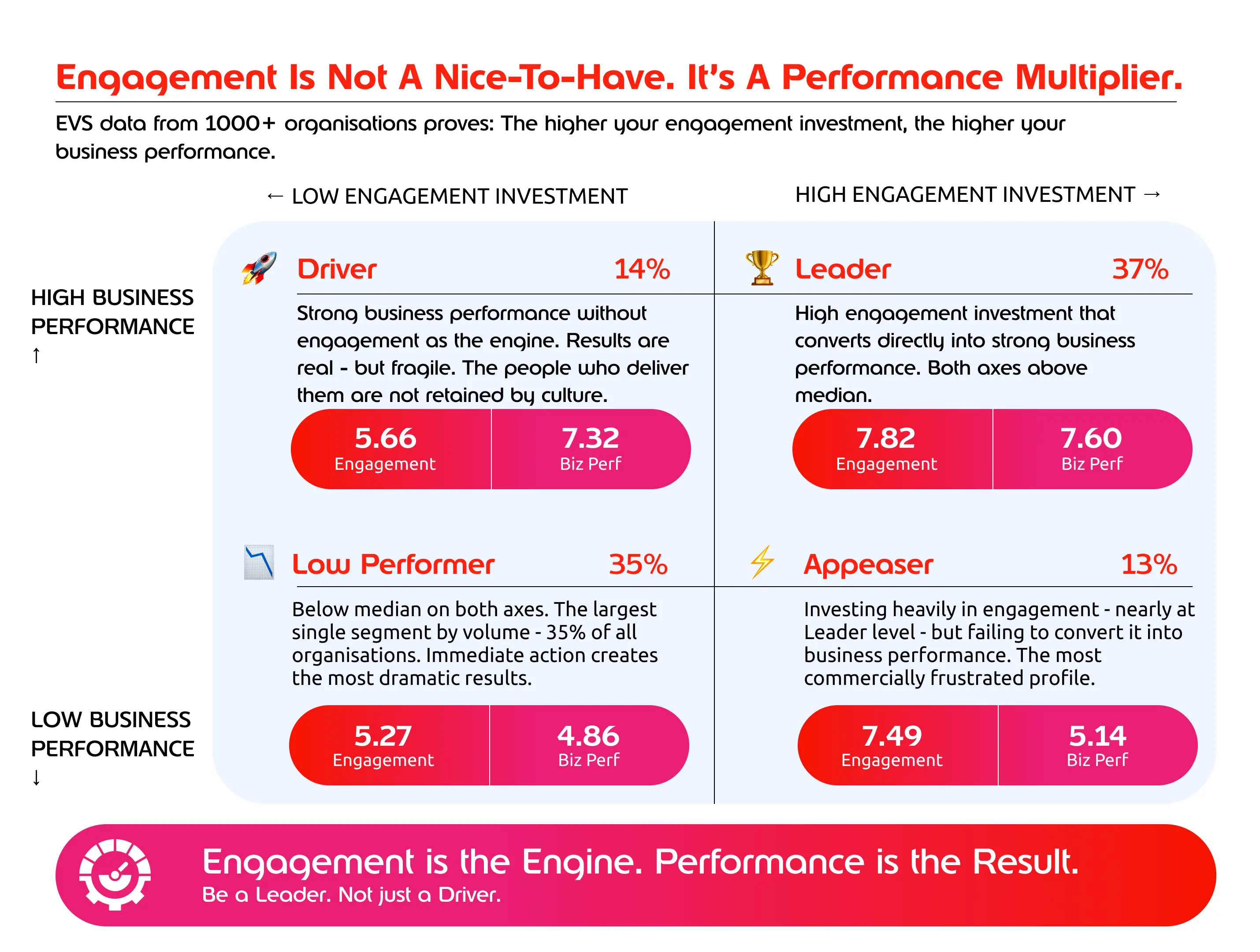
The Four Archetypes of Engagement Maturity
1. The Low Performer: Compounding Underperformance
Profile: 35% of organizations
Low Performers operate below median on both dimensions. Engagement is treated as a "nice - to - have" with minimal infrastructure - perhaps an annual survey, occasional recognition, fragmented wellness offerings.
What this looks like:
- Attrition consistently above 30%
- No dedicated engagement budget or owner
- HR operates reactively - problems surface only after people leave
- Leadership views engagement as a cost to minimize
The risk: Disengaged employees deliver poor customer experiences. Top talent leaves. The organization becomes vulnerable to competitive disruption.
2. The Appeaser: The Wasted Investment Trap
Profile: The most commercially frustrated segment
Appeasers invest heavily - often matching what Leaders spend. They run recognition programs, wellness initiatives, quarterly surveys. Multiple vendors. High activity. Yet business performance lags significantly.
What this looks like:
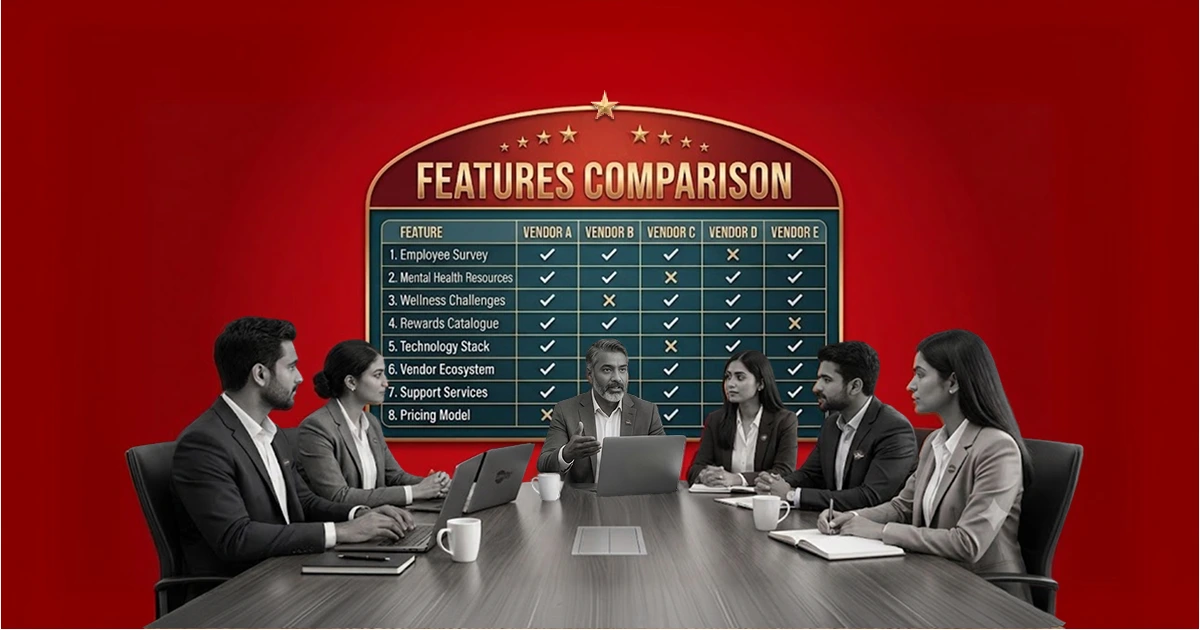
- Three to five separate vendors with no integration
- HR shows platform logins and redemption stats
- When Finance asks, "What's the ROI?" - there's no unified answer
- Attrition remains stubbornly high despite decent engagement scores
The risk: Leadership questions the value. Budget cuts loom. The 2.35 - point gap between investment and performance represents millions in unrealized returns.
3. The Driver: Unsustainable Success
Profile: Strong results without engagement infrastructure
Drivers achieve strong business performance despite low engagement investment. Revenue targets get hit. Productivity is high. But performance is driven by individual talent, not systems - creating a retention crisis waiting to happen.
What this looks like:
- "We're hitting our numbers, but losing our best people"
- High performers carry the organization but are burning out
- No predictive capability - attrition surfaces only after resignation letters arrive
- Leadership believes, "We just need to hire great people"
The risk: When key individuals leave, institutional knowledge walks out with them. Replacement costs are high. Performance becomes fragile.
4. The Leader: Sustainable Performance at Scale
Profile: High investment converts to high performance
Leaders outperform Low Performers by 56% on business performance. Both engagement investment and outcomes sit above median. Engagement isn't an HR activity - it's growth infrastructure.
What this looks like:
- Unified platform consolidating recognition, wellness, communications, and analytics
- Real-time dashboards showing eNPS trends and recognition velocity
- CHRO walks into board reviews with engagement - linked productivity metrics that Finance validates
- HR can forecast attrition risk 90 days before resignations happen using engagement signals as leading indicators
The competitive advantage:
Culture retains and multiplies talent. Performance is predictable and scalable. One platform, one login, one invoice. Admin time drops from 30 - 40% of HR Ops workload to single - digit.
What Leaders Do Differently
1. Unified Platform Infrastructure
Leaders consolidate recognition, wellness, communications, surveys, and analytics into a single system. When eNPS drops in the Pune office, they can instantly correlate it with recognition patterns, wellness participation, and manager engagement - all from one dashboard. Appeasers can't do this. Their data lives in separate systems that don't talk to each other.
2. Leading Indicators, Not Just Lagging Surveys
Most organizations use annual surveys - lagging indicators that report what already happened. Leaders track eNPS trends monthly, recognition frequency, and platform adoption velocity as leading indicators. The result? They forecast which teams face attrition risk next quarter and intervene before resignations happen.
3. Board-Level Visibility with Joint CHRO-CFO Ownership
In typical organizations, the CHRO presents culture metrics while the CFO presents cost metrics. Different data. Different narratives. Different conclusions.
Leaders create joint-ownership infrastructure where both executives operate from the same data source. Engagement becomes a board-level productivity metric - not an HR line item.
4. Daily Engagement Touchpoints, Not Episodic Campaigns
- Low Performers: Annual survey
- Appeasers: Recognition Week, Wellness Month, quarterly campaigns
- Leaders: Real-time recognition, continuous wellness access, daily communications
Daily touchpoints create sustained behavior change. Episodic campaigns create temporary spikes that fade.
The Cost of Staying Where You Are
The gap between archetypes isn't just philosophical - it's financial.
If you're a Low Performer:
You're leaving 56% performance on the table compared to Leaders. For a 2,000-employee organization with ₹50 crore revenue, that's ₹28 crore in unrealized performance.
If you're an Appeaser:
You're spending ₹40-60 lakh annually across multiple vendors with no consolidated ROI. Discovery question: "How many separate HR-related apps does your average employee log into in a week?" The answer is almost always 4+.
That's not just wasted money, it's 30-40% of your HR Ops team's time spent managing vendor relationships instead of driving strategy.
If you're a Driver:
Replacing a mid-level employee costs 6-9 months of salary. When performance depends on individuals rather than systems, every resignation creates business continuity risk. You're burning 80-100 FTE-months per year that nobody's tracking.
Moving Forward: Which Archetype Are You?
The archetype you occupy today doesn't determine where you'll be in 90 days.
Low Performers can become Appeasers by investing in foundational infrastructure - but only if that infrastructure is unified from the start.
Appeasers can become Leaders by consolidating fragmented vendors into one platform with unified analytics. One platform, one admin console, one dashboard, one point of contact. Your team gets 12 - 15 hours a week back.
Drivers can become Leaders by adding predictive engagement infrastructure before talent attrition undermines their performance.
The path forward depends on honest diagnosis. Most organizations overestimate their maturity. They believe they're Leaders when they're actually Appeasers - high activity, low outcomes.
The first step isn't buying another tool. It's understanding where you actually are.
The Strategic Question Every CHRO Must Answer
In the next board meeting, your CFO will ask: "What's the return on our engagement investment?"
Will you show activity metrics - logins, redemptions, survey completion rates? Or will you show business outcomes - retention improvements, productivity gains, engagement - linked revenue growth?
The difference between those two answers is the difference between the four archetypes. Leaders don't just run engagement programs. They build engagement infrastructure that drives measurable business performance.
Which archetype will you be twelve months from now?
About Edenred Engagement
Edenred Engagement is an integrated employee experience platform that connects HR initiatives to measurable business outcomes. Built as an Engagement OS, it unifies Employee Engagement programs, SmartHub analytics and integrations, and a comprehensive Wellness Platform into one intelligent system that drives retention, productivity, and business performance for mid-market and enterprise organizations.
Ready to move from your current archetype to Leader status?


A product marketer by craft and a SAAS enthusiast by nature. Aashi has built her career across HR Tech, EdTech & HealthTech understanding the mechanics of complex products and the humans they are built for. At Edenred India, she works at the heart of HR strategy and employee engagement, translating market insights into positioning that resonates with the leaders driving it.

.webp)