SmartHub

The HR Command Centre that binds your entire HR Tech Stack & enhances your EVP

SmartHub puts complete power in your hands - unify every HR and enterprise tool, personalize every touch point, and own your employer brand without IT dependencies or vendor limitations.

Talk to Sales
The Problem Today

Why HR Leaders Lose Control of Employee Experience

🔒 
Vendor-Controlled Experiences

Your employee touch points live in generic, vendor-branded portals you can't customize - diluting your employer brand at every interaction.

IT Dependency Bottlenecks

Every content update, integration request, or experience change requires IT tickets, design resources, and weeks of waiting.

📊
Fragmented Strategic Visibility

Your engagement data lives in silos across disconnected systems - making it impossible to prove impact or optimize holistically.

🔒 
Vendor-Controlled Experiences

Your employee touch points live in generic, vendor-branded portals you can't customize - diluting your employer brand at every interaction.

IT Dependency Bottlenecks

Every content update, integration request, or experience change requires IT tickets, design resources, and weeks of waiting.

📊
Fragmented Strategic Visibility

Your engagement data lives in silos across disconnected systems - making it impossible to prove impact or optimize holistically.

The Edenred logo featuring a stylized, modern design with a vibrant color palette, depicting the name 'Edenred' prominently, reflecting the brand's focus on employee benefits and digital solutions.
A stylized logo representing Edenred, featuring interconnected geometric shapes in a modern design. The logo conveys a sense of innovation and connectivity, ideal for a financial services company.

Talk to Sales

arrow

One Place for All your SaaS tools

Own the Front Door to Your Entire Digital Workplace

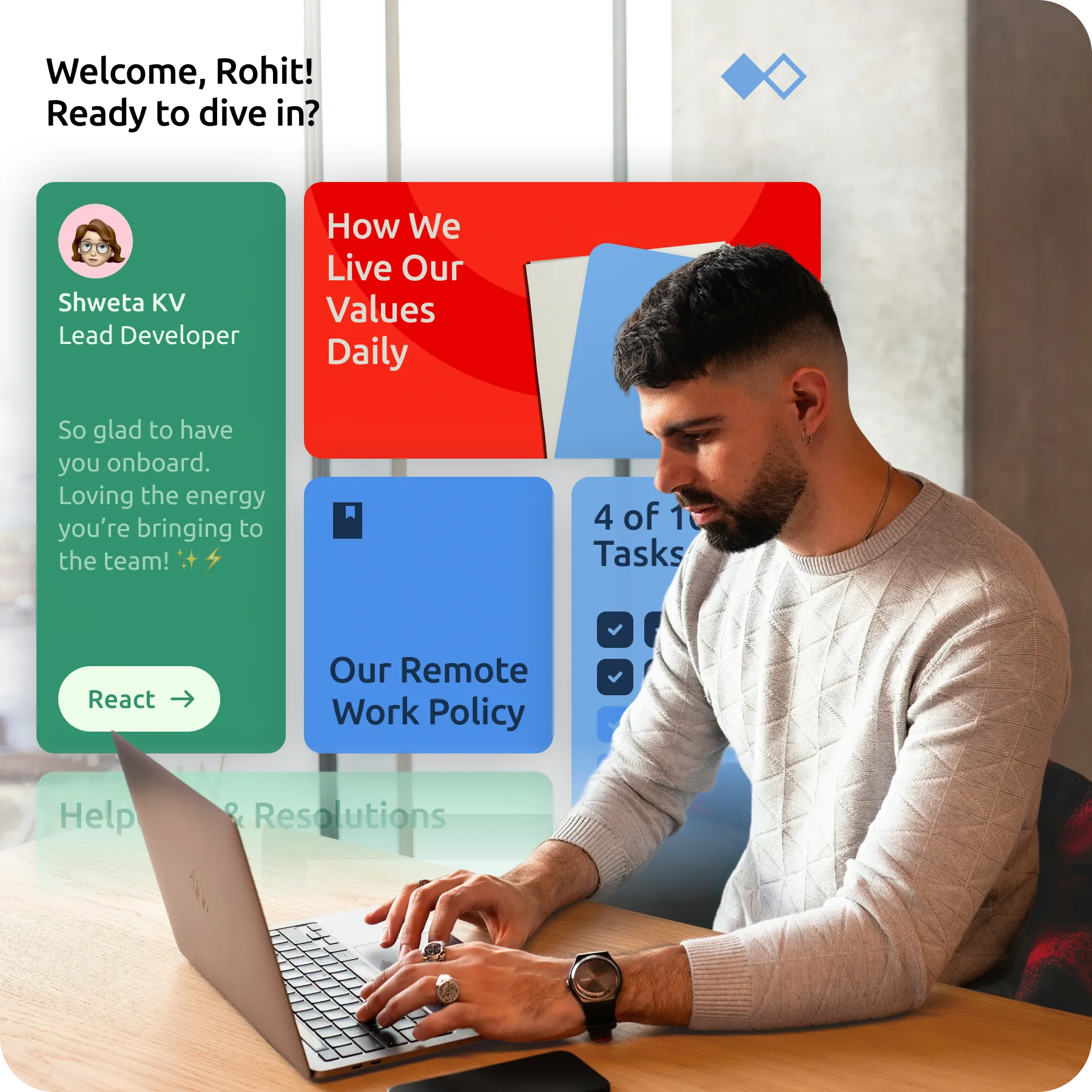
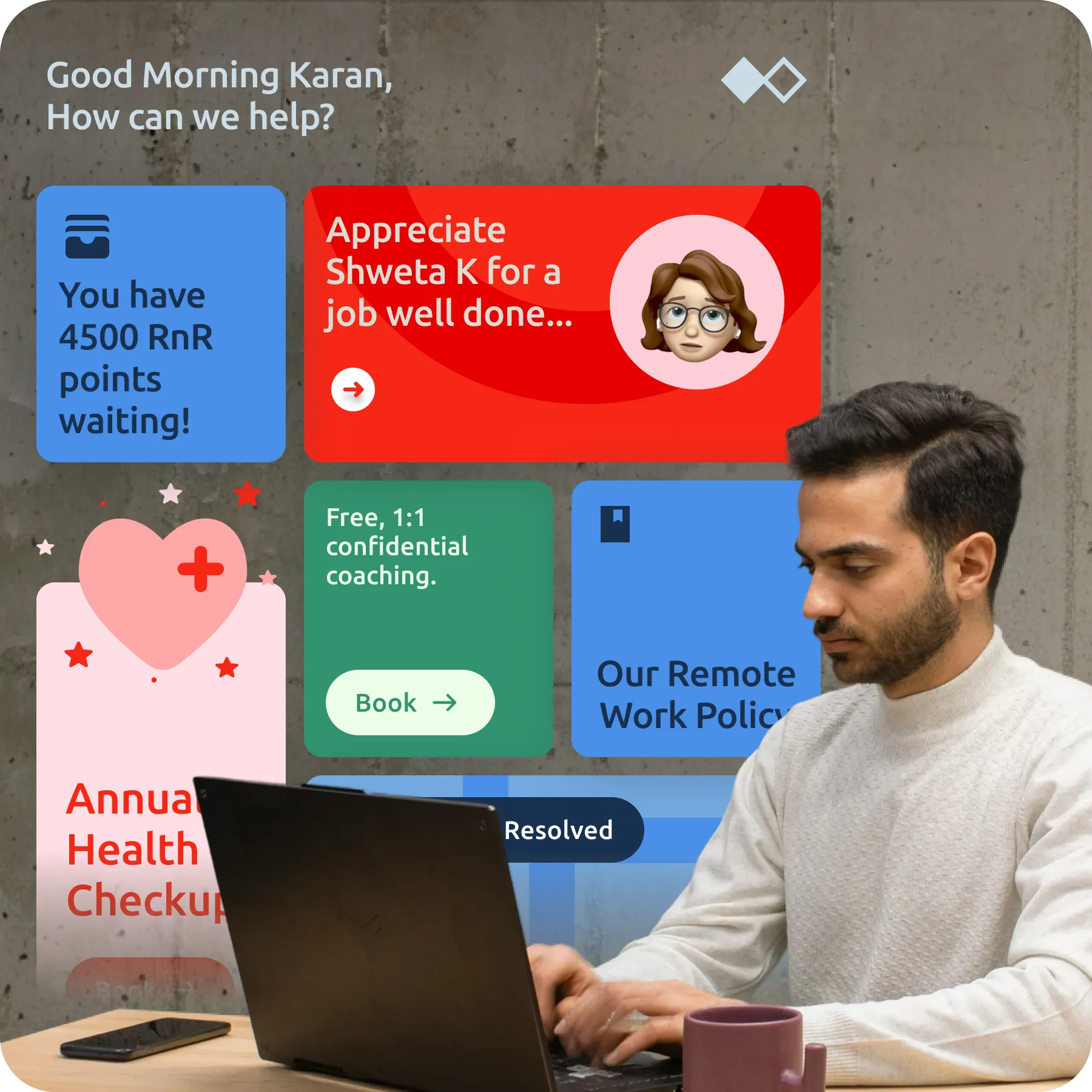
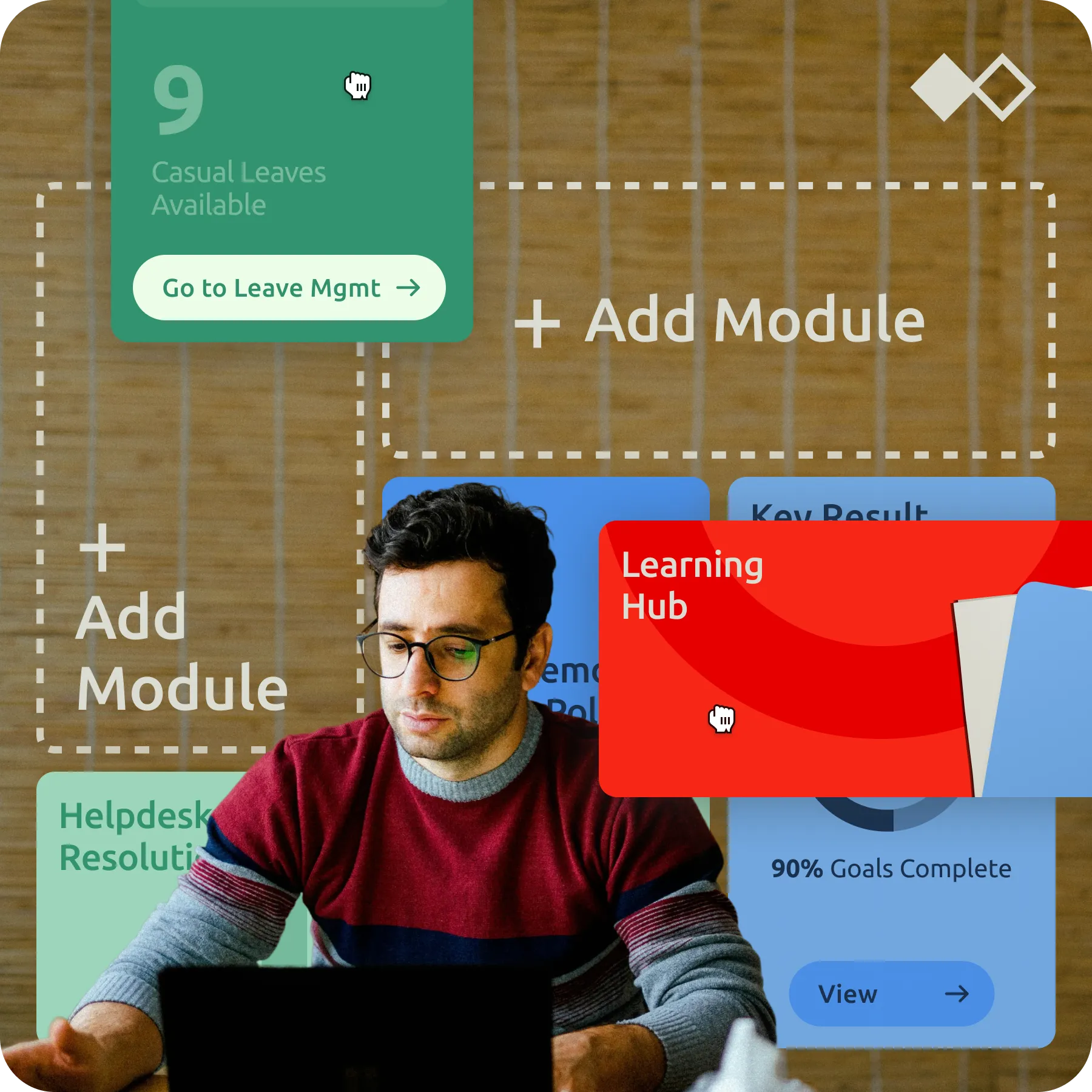
Connect every enterprise system - R&R, Wellness, Communication, Payroll, HRMS, Leave, CRM - into one hub you control, eliminating SaaS fatigue while positioning HR as the architect of seamless employee experience.

Employer Brand Amplification

Your Brand, Your Rules, Your Control

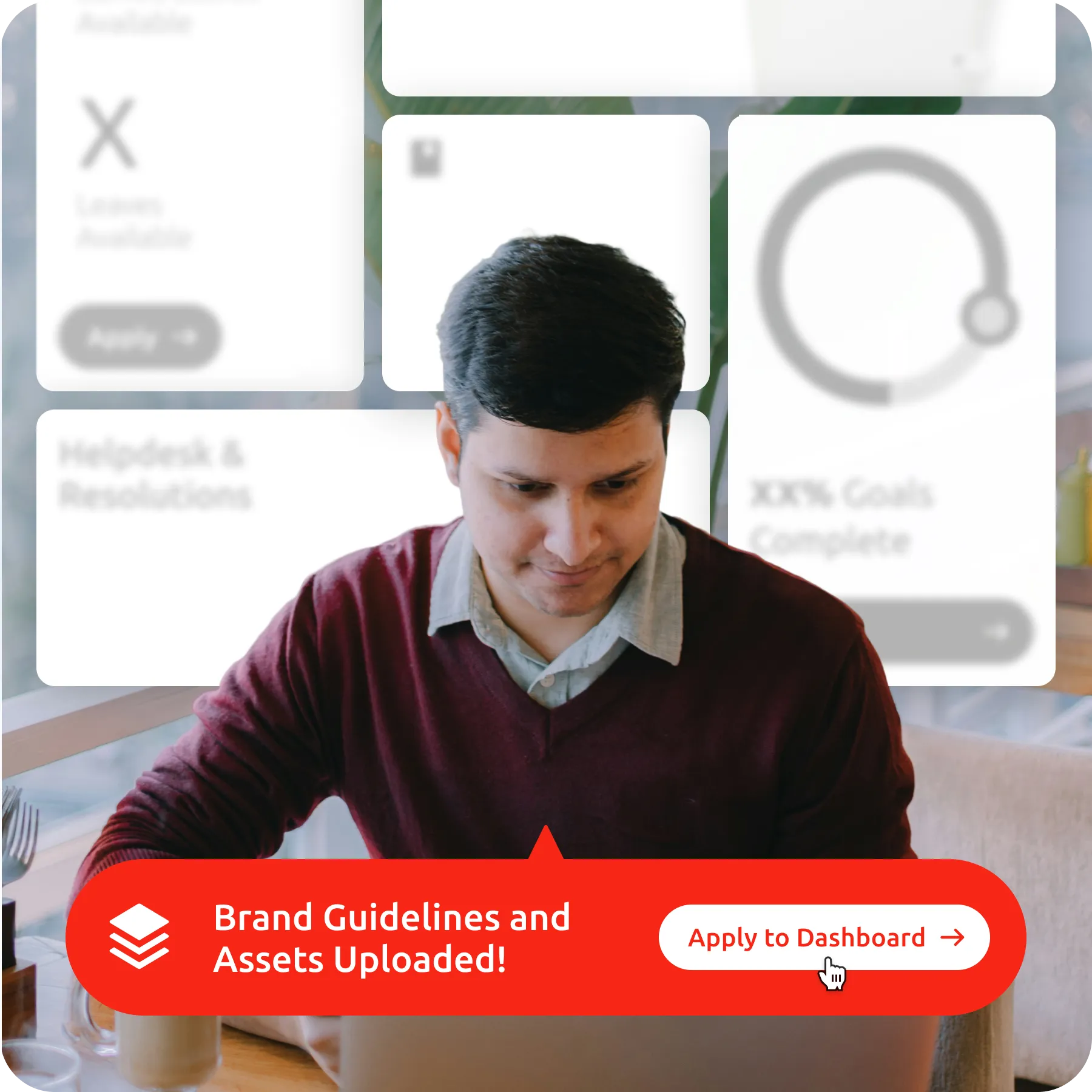
Design and evolve your hub exactly how you envision it - matching your fonts, colors, imagery, and content - without design teams, development sprints, or vendor approval processes limiting your vision.

Employee Segmentation

Deliver Relevant Experiences to Every Employee Segment

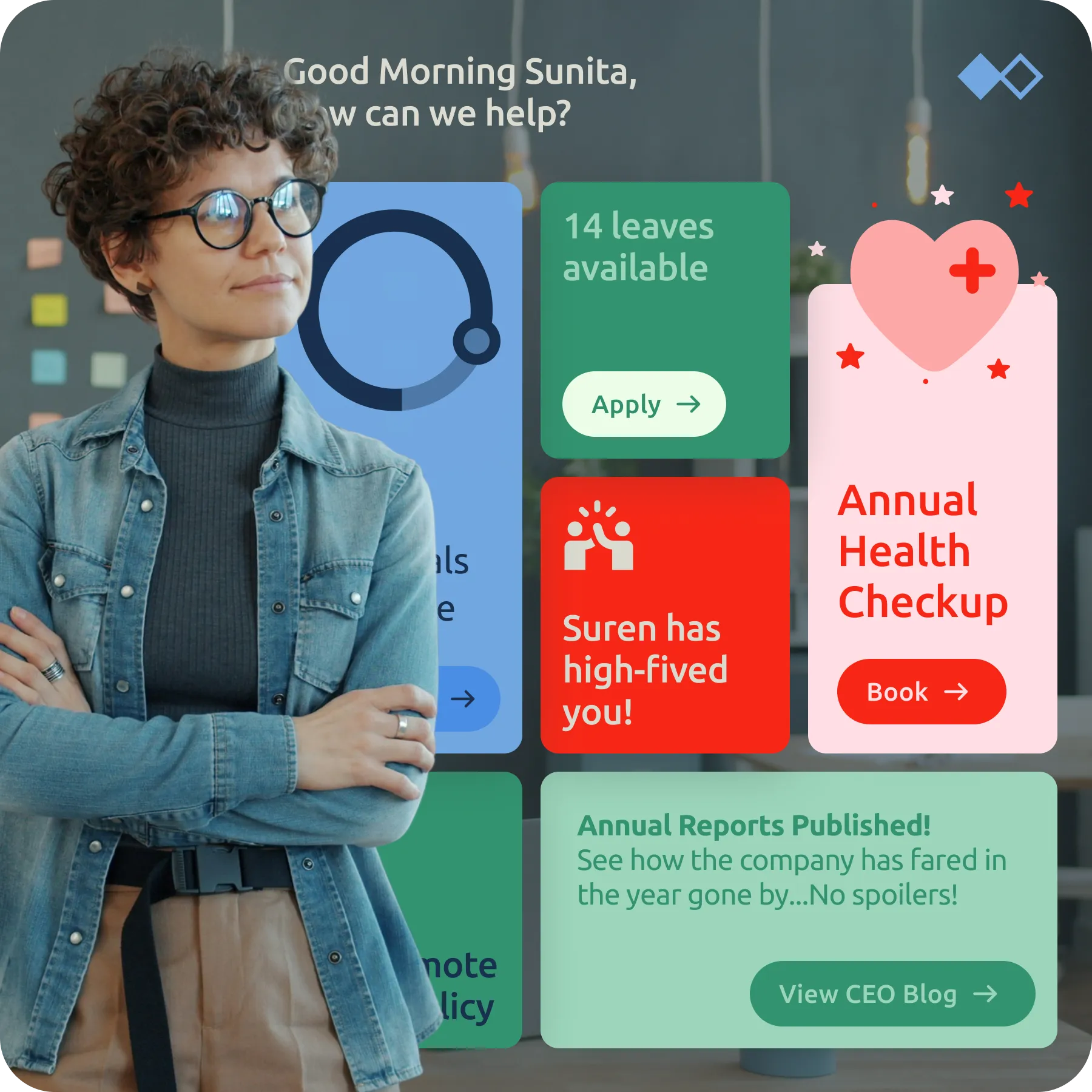
Create role-based, location-specific, department-tailored experiences that make every employee feel seen—driving engagement through relevance while proving HR's strategic understanding of workforce diversity.

Analytics and Dashboards

Prove Employee Experience Impact With Consolidated Data

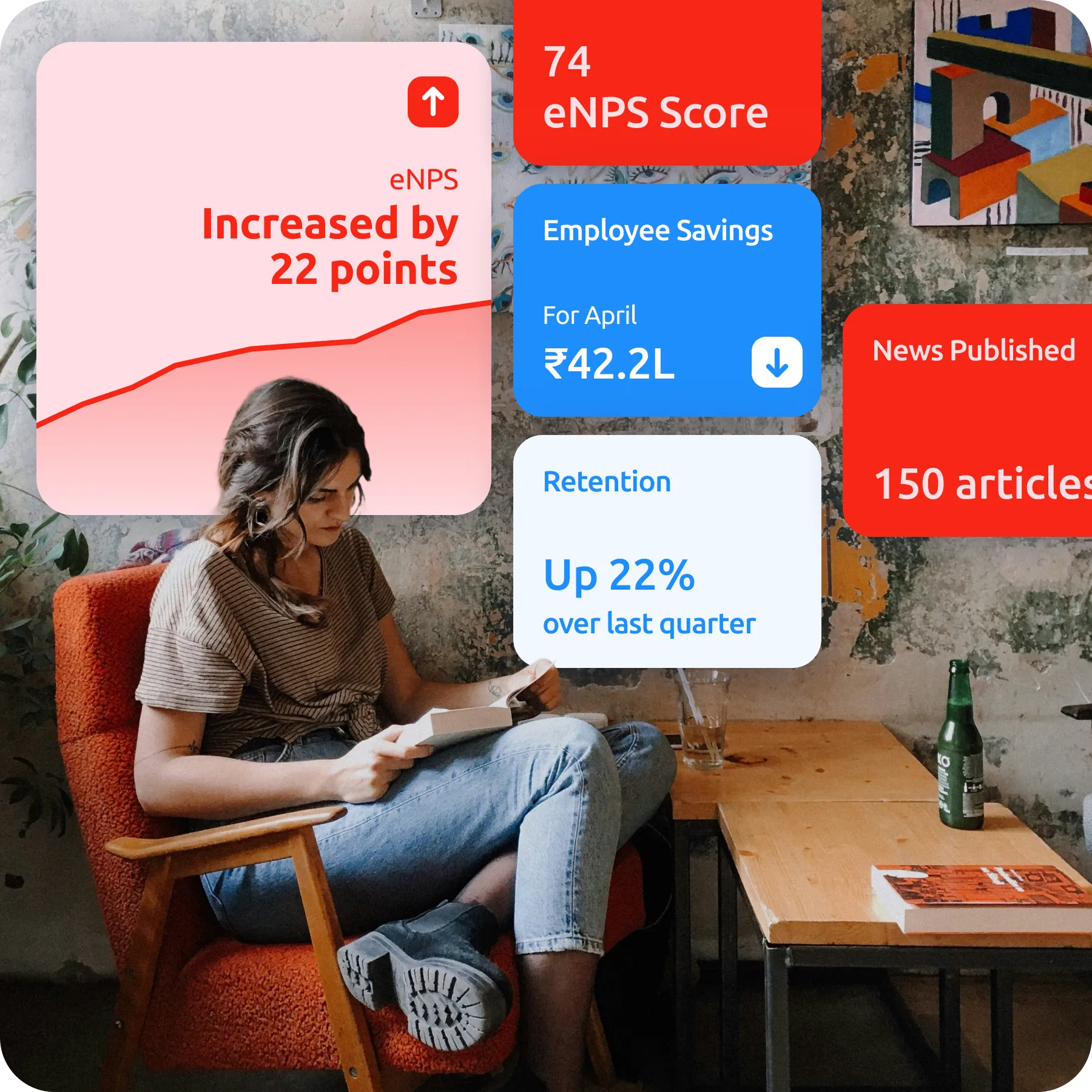
Track adoption, engagement, and utilization across all systems through one dashboard - transforming HR from cost center to strategic function with data that demonstrates clear connections between experience investments and business outcomes.

Maximize ROI

Surface Underutilized Tools and Hidden Benefits

Bring overlooked programs, benefits, and resources to the forefront—helping employees discover what they didn't know existed and driving higher returns on your existing technology investments.

Cultural Connection

Embed Recognition, Wellbeing, and Connection Into Daily Flow

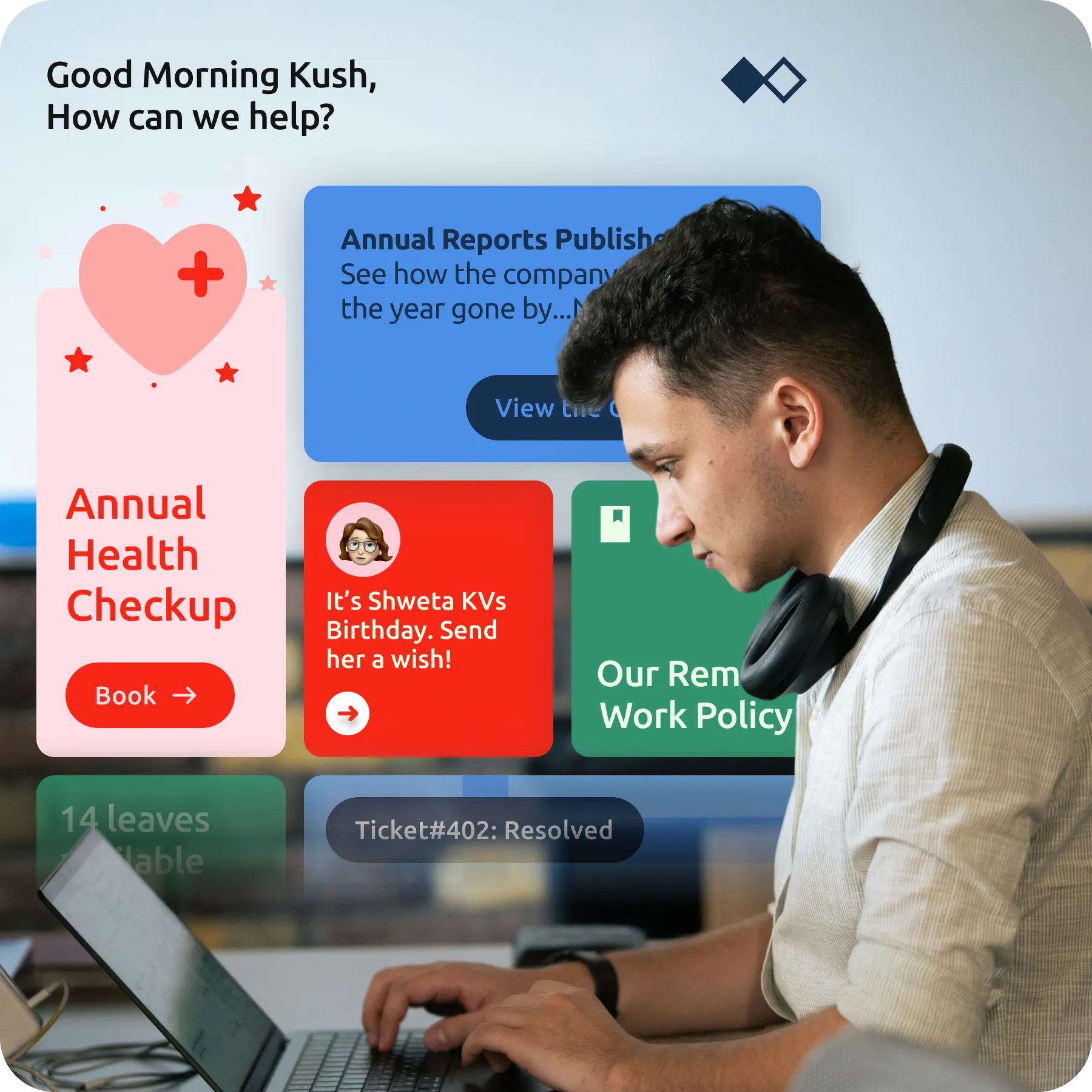
Surface company news, surveys, recognition, birthdays, and wellbeing content directly on the homepage - increasing awareness, participation, and cultural alignment without requiring employees to hunt across platforms.

HR SmartHub

HR SmartHub

HR SmartHub

HR SmartHub

HR SmartHub

HR SmartHub

HR SmartHub

HR SmartHub

HR SmartHub

HR SmartHub

Business Impact

Unified Employee Experience that Drives Business Impact

Track adoption, engagement, and utilization across all systems through one dashboard - transforming HR from cost center to strategic function with data that demonstrates clear connections between experience investments and business outcomes.

🥳
Reclaim Productivity

Unified access eliminates app-switching across 8-12 systems - employees spend less time hunting for tools and more time using them, driving measurable productivity gains

📊
Higher Tool Adoption

Increased awareness and discovery drive utilization of existing investments - turning underused systems into valued resources that deliver intended ROI.

🧲
Stronger Employer Brand

Fully customized, brand-owned digital experiences reinforce company identity at every touchpoint, strengthening employee connection to organizational culture.

Strategic HR Visibility

Consolidated engagement data across all systems transforms HR from tool administrators to strategic partners who optimize the complete employee experience.

🔁
Employee Retention

Boost loyalty by making employees feel recognized, appreciated, and connected to the company’s mission. Rewarding the right behaviors helps you retain top talent and reduce attrition risk.

📊
Employee NPS & Satisfaction Scores

Improve how employees rate your workplace experience. Recognition is a proven lever to raise engagement and satisfaction levels across teams.

🧲
Employer Brand & Talent Attraction

Great recognition stories travel fast — on LinkedIn, Glassdoor, and word of mouth. Make your company a magnet for top talent by building a culture employees love to talk about.

Business Productivity

When employees feel recognized, they’re more motivated to go the extra mile. Boost team performance and reduce execution time by creating a culture that fuels ownership.

The Edenred logo featuring a stylized, modern design with a vibrant color palette, depicting the name 'Edenred' prominently, reflecting the brand's focus on employee benefits and digital solutions.
A stylized logo representing Edenred, featuring interconnected geometric shapes in a modern design. The logo conveys a sense of innovation and connectivity, ideal for a financial services company.

ISO 270001

Certified for data security. You’re always in safe hands.

SOC2

Audited for security. Reliable protection
for your data.

DPDPA

Privacy compliant.
Your personal data is handled safely.

ISO 270001

Certified for data security. You’re always in safe hands.

SOC2

Audited for security. Reliable protection
for your data.

DPDPA

Privacy compliant.
Your personal data is handled safely.

Why choose Edenred?

At Edenred India, we blend innovation, trust, and impact to help organizations unlock value, one reward, one recognition, and one employee at a time

25yrs

Experience in India

Deep expertise built on decades of local market understanding and trust.

10L+

Corporate Clients Globally

Partner of choice for leading enterprises across sectors.

6Crore+

Users Across the Globe

Infrastructure and trust that caters to a massive clientele across the globe.

PAN India

Merchant Network

Seamless reward access across thousands of towns and cities.

What is a unified employee engagement platform?

A unified employee engagement platform connects every system employees use - R&R, wellness, communications, payroll, benefits, recognition, learning - into one branded interface with single sign-on access. Instead of juggling 8-12 separate applications, employees access everything from one place. The word "unified" matters. Most organizations accumulate tools over time: a benefits portal from one vendor, recognition from another, HRMS from a third. Each has its own login and interface. A unified platform doesn't replace these systems - it integrates them, creating one employee-facing experience while HR maintains one control point.

What makes these platforms effective: SSO that eliminates password fatigue, personalization that shows employees only what's relevant to them, mobile access for frontline workers, customizable branding that reflects your company (not vendor logos), and consolidated analytics across all systems. Done right, unified platforms eliminate fragmentation, increase adoption of existing tools, and give HR the ability to design and optimize the complete employee digital experience.

How do fragmented HR systems undermine strategic people analytics and decision-making?

Data fragmentation represents one of the most significant barriers to strategic HR leadership. When employee information lives across disconnected systems - attendance in one platform, engagement scores in another, benefits utilization in a third, recognition data in a fourth - HR teams cannot establish meaningful correlations or identify systemic patterns. This siloed architecture forces reactive problem-solving rather than proactive strategy development.

Unified data architectures transform this dynamic entirely. When all employee touchpoints - from payroll access patterns to recognition participation, benefits enrollment to learning engagement - flow into consolidated dashboards, HR gains the analytical foundation for strategic decision-making. This comprehensive visibility enables HR to move from reporting what happened to predicting what will happen and prescribing interventions that drive specific business outcomes. The shift from fragmented reporting to strategic analytics fundamentally changes HR's organizational role.

Why does employer brand dilution occur in vendor-controlled employee portals?

Employer brand dilution happens when employee touchpoints reflect vendor aesthetics rather than company identity. Most enterprise software presents generic interfaces - standard fonts, predetermined color schemes, templated layouts - that organizations can only minimally customize. Employees log into benefits portals, HRMS systems, and engagement platforms that look nothing like their company's brand, creating subtle but cumulative disconnection from organizational identity. This branding inconsistency matters more than many leaders recognize. Employer brand isn't just external recruiting marketing - it's the daily visual and experiential reinforcement of company culture and values. When employees interact with HR tools that feel generic and vendor-branded, it signals that people operations are outsourced commodities rather than core organizational functions.

Organizations that maintain brand consistency across all employee touchpoints see measurably stronger cultural alignment. When the hub employees use daily for payroll, benefits, recognition, and communications reflects exact company fonts, colors, imagery, and voice, it reinforces belonging and organizational identity at every interaction. This isn't superficial aesthetics - it's strategic culture building. Employees who consistently encounter their employer's brand in digital experiences report higher connection to company mission and values. Brand-controlled employee experiences transform routine administrative interactions into cultural reinforcement moments, strengthening the employer-employee relationship through consistent visual and experiential identity.

How do unified platforms improve benefits adoption and ROI?

Organizations invest heavily in benefits - health insurance, retirement, wellness, professional development, discounts, recognition - yet struggle with adoption. Employees don't know what's available, can't easily access programs, or find enrollment too complicated. HR budgets increase while satisfaction stays flat. Unified platforms solve visibility and access. Surface benefits on a homepage employees visit daily. Integrate enrollment so they don't hunt for vendor portals or remember separate logins. Personalize what they see - parents see childcare support, commuters see transportation benefits, remote workers see home office stipends.

The ROI compounds. When employees use available benefits, satisfaction rises and retention improves. Cost-per-employee decreases as fixed investments serve more participants. Analytics prove which benefits drive engagement and which don't - transforming benefits from compliance function to strategic capability that measurably impacts culture and retention.

Build and control your employee experience platform in a matter of days

Talk to Sales

What is the true cost of IT dependency bottlenecks in HR operations?

IT dependency bottlenecks create hidden but substantial costs that extend far beyond delayed projects. When HR teams must submit tickets for every content update, integration request, or experience modification, they lose the agility required for strategic responsiveness. A benefits enrollment campaign that should launch immediately waits three weeks for IT resources. A recognition program that could address emerging retention issues sits in the development queue for months. Time-sensitive communications miss their moment because implementation requires technical resources. The strategic cost is even more significant than operational delays. HR leaders with valuable insights about employee needs cannot act on them without technical intermediaries. This dependency transforms HR from strategic partners who design experiences into requestors who wait for implementation. When market conditions change, organizational priorities shift, or employee needs evolve, HR cannot respond at business speed. They become reactive administrators rather than proactive architects of employee experience.

Self-service platforms that eliminate IT dependencies for routine operations fundamentally change HR's strategic capacity. When HR teams can update content, launch initiatives, modify experiences, and respond to employee needs without technical tickets, they operate at the speed of business strategy. This operational autonomy doesn't just save time - it enables HR to demonstrate strategic value by responding to business needs with the agility executives expect from all strategic functions. The shift from IT-dependent to self-sufficient operations transforms HR's organizational positioning.

How do organizations measure success after implementing unified platforms?

Measurement should happen in layers, moving from activity metrics to business outcomes. Start with adoption metrics: Are employees actually using the platform? Track login frequency, unique users, and feature utilization across integrated tools. Monitor time-to-task completion—how quickly can employees enroll in benefits, submit time-off requests, or access pay information compared to the old fragmented approach.

Then measure engagement patterns: Which content drives repeated visits? Where do employees spend time? What tools see increased usage after integration? These behavioral insights reveal what's working and where optimization opportunities exist.

Finally, connect to business outcomes: Did benefits enrollment increase? Did recognition participation improve in departments with low engagement? Did support tickets decrease as employees found answers through self-service? Did time-to-productivity improve for new hires with streamlined onboarding? The advantage of unified platforms is consolidated analytics. Instead of piecing together data from separate vendor dashboards with different metrics and reporting periods, you see the complete employee digital experience in one place. This holistic view enables strategic decisions impossible with fragmented data.

Can unified platforms integrate with existing HR systems and enterprise tools?

Integration is the foundation of unification, and modern platforms handle this through standard protocols that don't require replacing existing systems. Most platforms connect with HRMS, payroll systems, benefits administration, learning management systems, recognition platforms, wellness programs, time and attendance tools, and enterprise applications through APIs and SSO protocols. The unified layer sits on top of existing infrastructure, creating one employee-facing interface while specialized systems continue their functions in the background.

Your payroll system still processes payroll. Your HRMS still manages employee records. Your benefits administrator still handles enrollment. The platform doesn't replace these - it connects them so employees access everything from one place without knowing or caring which vendor provides which service. The technical approach matters. Look for platforms that use standard integration methods rather than proprietary connections that create vendor lock-in. This ensures flexibility as your technology stack evolves and new tools get added over time.

How does role-based content delivery improve employee engagement and reduce information overload?

Generic content distribution creates noise that actively disengages employees. When new joiners receive communications about executive leadership programs, when individual contributors see manager-specific resources, when employees in one country encounter benefits irrelevant to their location, they learn to ignore organizational communications entirely. This broadcast approach treats diverse workforces as homogeneous audiences, resulting in low engagement rates and missed opportunities to deliver genuinely valuable information.

Intelligent content targeting systems that deliver role-based, location-specific, department-tailored experiences transform this dynamic. Managers automatically see leadership development resources without manual segmentation. Employees in different countries encounter locally relevant benefits and compliance information. Department-specific tools surface for teams that actually use them. This targeted delivery doesn't require HR to manually create separate experiences - sophisticated platforms handle segmentation dynamically based on employee attributes. Role-based delivery proves that the organization understands individual employee contexts, strengthening the employer-employee relationship through demonstrated relevance.

How quickly can organizations launch a unified employee experience platform?

Realistic timelines run 4-8 weeks for most organizations, though complexity varies based on the number of integrations and customization requirements. The process typically unfolds in phases. SSO integration with your identity provider happens first—usually 1-2 weeks depending on IT resources and existing infrastructure. Employee data synchronization follows, connecting the platform with your HRMS to ensure accurate user information and permissions. Content migration and brand customization happen in parallel with technical integration.

The smart approach is phased rollout rather than big-bang launch. Get core functionality live quickly—basic access, key integrations, essential content. Let employees start using the platform, gather feedback on what's working and what needs adjustment, then add additional integrations and features progressively. Avoid the trap of waiting until everything is perfect. Employee feedback from actual usage is more valuable than theoretical planning. Launch with 70% ready, iterate based on real behavior, and reach 100% faster than trying to predict every need upfront.

Build and control your employee experience platform in a matter of days

Talk to Sales

Frequently Asked Questions

How does SmartHub give HR teams control without requiring technical expertise? 
SmartHub's intuitive interface eliminates technical barriers—HR teams design layouts, update content, create personalized experiences, and launch campaigns without IT dependencies. The platform handles complex integrations while HR maintains complete control over employee-facing experiences. 
Can SmartHub match our exact employer brand standards and visual identity? 
Absolutely. Edenred's design team collaborates with your organization to create fully customized experiences matching your precise fonts, colors, imagery, and content style—delivering a hub that looks purpose-built for your company, not a generic vendor portal. 
How does SmartHub help HR prove ROI on employee experience investments? 
Consolidated analytics track adoption, engagement, and utilization across all integrated systems through unified dashboards. HR gains visibility into which initiatives drive outcomes, enabling data-driven optimization and clear demonstration of strategic impact to executive leadership. 
What systems can SmartHub integrate with, and how complex is implementation? 
SmartHub connects with Payroll, HRMS, Leave Management, CRM, ATS, Wellness platforms, and other enterprise tools through SSO-enabled integration. Implementation complexity varies by organization, but most launch within 4-8 weeks with Edenred's implementation support. 
How does personalization work for diverse, global workforces? 
SmartHub's personalization engine delivers role-based, location-specific, department-tailored, and language-appropriate experiences dynamically. HR creates segmented content once, and employees automatically see what's relevant to them—no manual portal management required. 
Can HR teams update content and launch initiatives in real-time? 
Yes. SmartHub eliminates IT dependencies for content management—HR teams update information, launch campaigns, surface new tools, and respond to business needs immediately, transforming from reactive administrators to proactive experience architects. 
How does SmartHub help organizations maximize existing technology investments? 
By surfacing underutilized tools and hidden benefits directly on the homepage, SmartHub drives discovery and adoption of existing systems. HR can demonstrate increased utilization of current investments, justifying their value and informing future technology decisions. 
Does SmartHub work for organizations with frontline or deskless employees? 
Absolutely. SmartHub's mobile-responsive design ensures seamless experiences for employees without desk access. Frontline workers access all tools, benefits, and communications from smartphones with the same personalized, branded experience as office-based employees.