August 17, 2026
.webp)
Table of Contents
h2
Example H2
This is a div block with a Webflow interaction that will be triggered when the heading is in the view.
Introduction
Every employee engagement demo looks roughly the same. A recognition feed. A survey builder. A wellness widget. A dashboard with some encouraging green arrows.
The differences don't show up in feature lists. They show up twelve months later, when revenue per employee stays flat, attrition rate refuses to slow down and top employees start giving exit interviews.
In our analysis of 1,000+ organizations across the globe, we identified four distinct engagement archetypes based on their approach to employee engagement investment and execution.
The finding that surprised us: The highest performers ("Leaders") and mid-performers ("Appeasers") spent nearly identical amounts (7.82 vs 7.49 on our engagement investment index). Yet Leaders achieved approximately 48% better business outcomes.
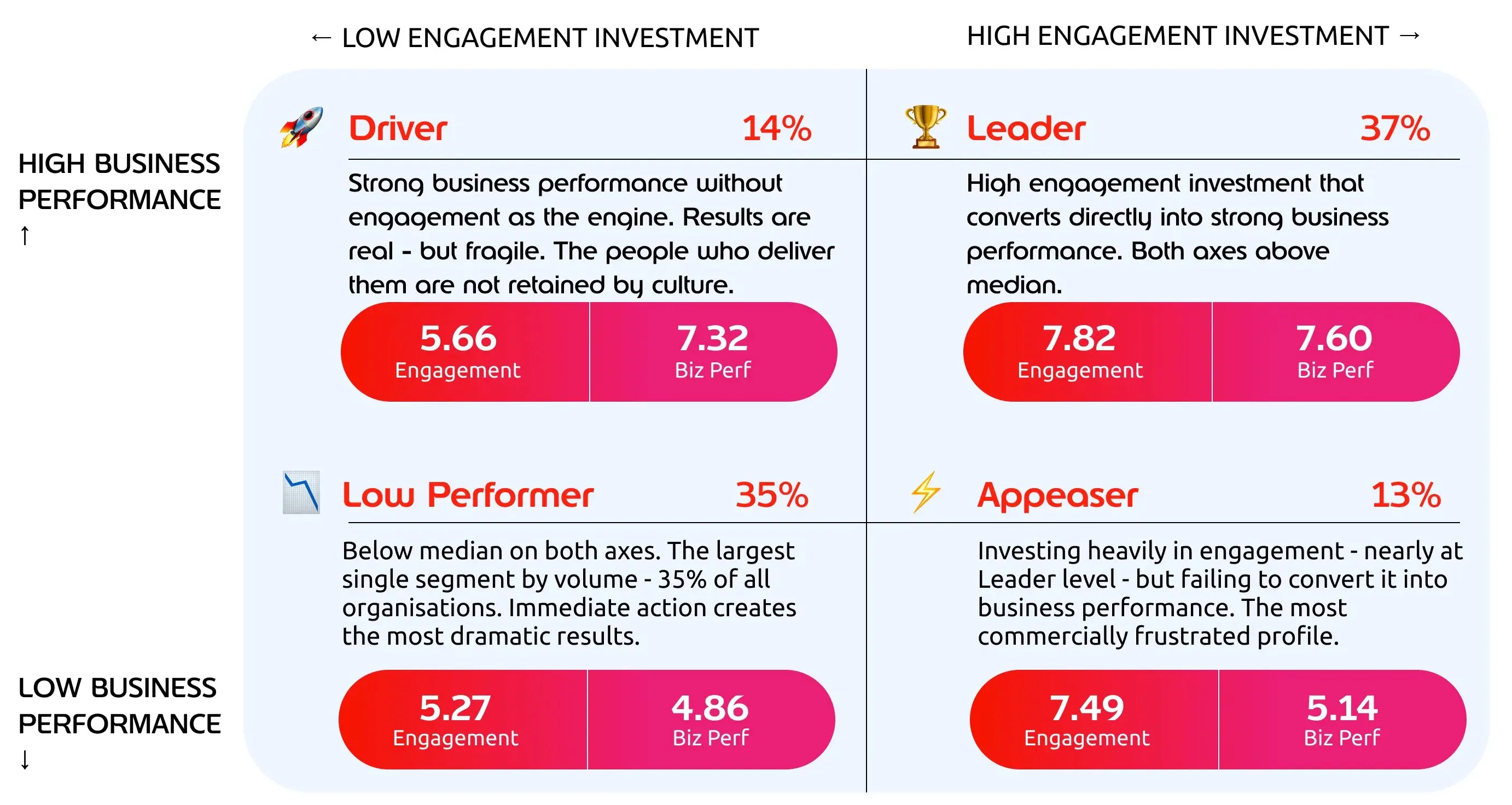
The differentiator wasn't budget. It was whether they built infrastructure or assembled point solutions.
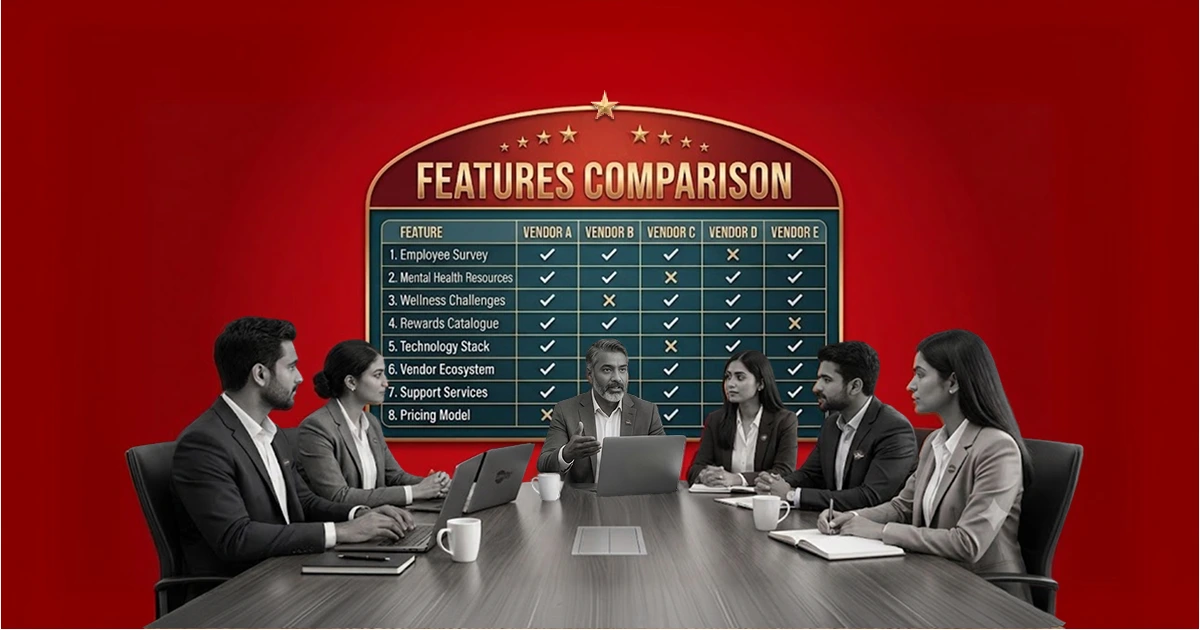
This article is for HR leaders about to sit through six vendor demos and don't want to discover the hard way, a year in, that they bought a program instead of infrastructure.
Program vs. Infrastructure: The Question That Separates Vendors
Here's the fundamental question that shaped our entire platform design:
Are we building a program, or are we building infrastructure?
A program is a collection of point solutions that each solve one problem in isolation - a survey tool, a rewards catalogue, a wellness app. They rarely talk to each other, and nobody outside HR checks whether they're working.
Infrastructure is a unified system where every module feeds the others, data flows into business intelligence your leadership trusts, and engagement becomes measurable against outcomes that matter to the board.
We chose to build infrastructure. That decision cascaded into every design choice below.
Principle 1: Complete Module Coverage
A job that only pays bills stays a job. Add growth and connection, it becomes a career. Add recognition and purpose, it becomes a vocation.
This is why engagement platforms must cover all five layers of employee needs right from basic benefits to self-actualization within one integrated ecosystem.
%201%20(1).webp)
The fragmentation problem
Most organizations buy specialized vendors for surveys, wellness, rewards, etc. Even comprehensive platforms often lack critical modules (forcing separate purchases) or miss key features within existing modules like peer-to-peer recognition being absent from R&R tools, or preventive health programs missing from wellness modules.
Our approach: Complete coverage in one platform
Why integration compounds engagement
When these modules are siloed, engagement fragments. When one module informs another, it compounds:
- Recognition data flows into retention analytics
- Wellbeing participation connects to productivity metrics
- Survey insights trigger recognition workflows automatically
- Employees completing wellness challenges receive rewards instantly
Employees access everything from a single hub - no switching between apps, no juggling multiple logins, no confusion about where to find what they need.
Evaluation questions
Does your vendor genuinely cover all five layers, or are you assembling separate contracts to get full coverage?
Can data flow between modules automatically, or are these separate systems that don't talk?
Principle 2: Unified Integration Architecture
Every additional login is friction. Every separate interface is cognitive load. Every "which app was that in?" moment is a small abandonment that kills adoption.
The best wellness program fails if employees need to download a separate app and create yet another account. The most thoughtful survey gets ignored if it requires logging into a system they've never seen before.
The standard approach
Employees juggle 10 logins for 10 different things, each with different passwords, interfaces, and learning curves. HR tools, payroll systems, benefits platforms, wellness apps, recognition tools - all separate destinations.
Our approach: One front door for everything
One login for everything HR. Employees access recognition, rewards,wellness, surveys, communications, benefits, leave requests, payroll information, expense management - all from a single front door.
Behind the scenes, we integrate with your HRMS, Payroll, Performance Systems, and Learning Platforms. Login flows automatically. Employees see one simple interface. You control the entire employee digital experience.
New employees get one login on day one and immediate access to everything. No waiting for separate platform access or multiple signups.
Evaluation questions
Do employees have one login for everything, or are they juggling multiple systems?
When you add a new module, can it appear in the same hub without requiring employees to learn a new interface?
Principle 3: Seamless, Branded Employee Experience
Picture this: A new employee logs in on day one. They see a generic vendor logo, stock photos, and a templated interface that looks nothing like your company's brand.
Their mental file: "Extra thing I have to do." Not "Part of my job."
Generic platforms feel like homework. Branded platforms feel like infrastructure.
When employees see third-party branding or templated designs, they mentally file it under "extra work," not "part of my workplace." Brand consistency builds trust and adoption. A platform that looks and feels like your company gets treated as an extension of the workplace, not an external obligation.
What we built
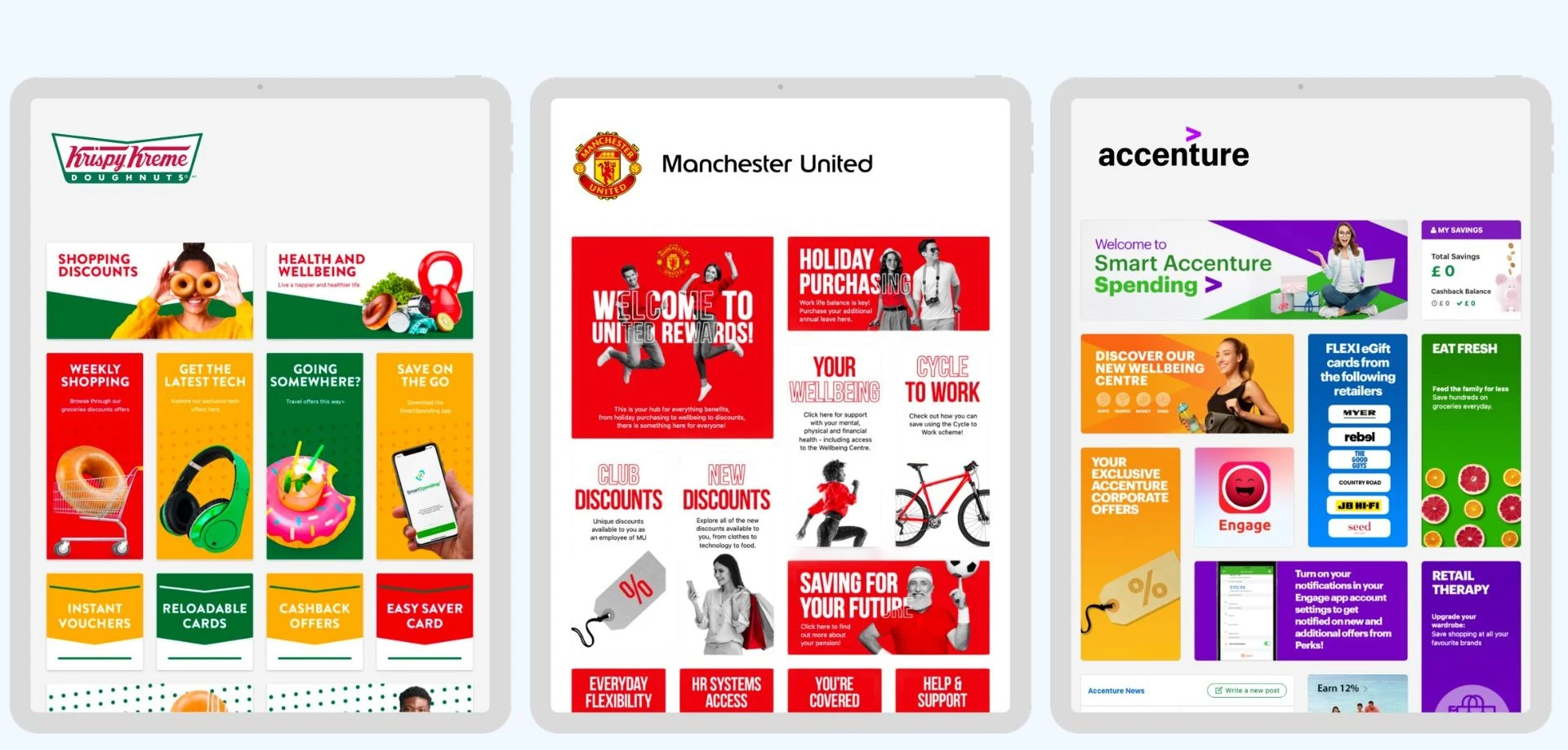
Fully customizable branded experiences that match your company's identity - not just logos and colors, but custom themes, design schemes, fonts, imagery, tone, and content that employees recognize as authentically yours.
A branded homepage that HR controls without waiting on development teams. Customize at the intranet level - adjust themes, swap imagery, update messaging, refine the look to match campaigns, seasons, or evolving brand guidelines - all without technical dependencies.
Integration where work already happens: Microsoft Teams, Slack, and mobile apps so recognition and rewards live where employees already work, not in another destination they have to remember to visit.
Evaluation questions
Will this look like your tool or the vendor's?
Can your team control the design, themes, and layouts without submitting tickets for every change?
Principle 4: Personalization at Scale
A 25-year-old frontline worker in Mumbai doesn't need the same perks as a 45-year-old manager in Berlin. Yet most platforms blast the same content to everyone.
The result: Irrelevant noise. Employees stop opening everything, including what actually applies to them.
Frontline workers seeing desk-based perks disengage immediately. Remote employees offered office-only benefits feel excluded. Generic messages create noise and employees stop opening communications, even the ones that matter.
Multi-generational, global workforces don't have uniform needs. Rewards, currencies, and cultural preferences vary by location. What works in one country doesn't automatically work everywhere else.
Our approach: Automated personalization at scale
Segment by employee attributes: Deploy rule engines that automatically segment content, tool access, benefits, and communications by role, location, department, generation, and work environment. The employees only see what's relevant to them.
Global reward networks with local options: Offer thousands of brands across currencies and cultures, so employees anywhere can redeem something meaningful in their local context.
Personalize each tool independently: Recognition, communications, surveys, and wellbeing can be customized individually based on different employee attributes - not just one global toggle.
Support language at scale: Scale across 100+ languages so communications reach people in their preferred business language.
Less is more: Send fewer messages that apply to the person reading them, and people start reading messages again.
Evaluation questions
Will a frontline employee in one location see different, locally relevant content than a remote manager in another?
Can you create sophisticated segmentation rules based on multiple employee attributes?
Principle 5: Predictive Intelligence &Automation
Quarterly surveys are autopsies, not diagnostics. By the time leadership reviews three-month-old data, your best people may already be interviewing elsewhere.
Static reports show you the past. Manual processes don't scale when recognition depends on managers remembering birthdays and anniversaries, consistency fails. And intelligence without action is just expensive reporting.
What infrastructure does differently
Real-time dashboards that connect engagement to business outcomes: Link engagement data directly to retention, productivity, and revenue - accessible on demand with live updates on adoption rates, budget utilization, and ROI. Not quarterly reports that tell you what already went wrong.
Flag attrition risks before they become exits: Rapidly identify gaps in enablement, role clarity, belonging, and fair treatment - the factors that drive attrition - before they show up in exit interviews.
Automate recognition and rewards workflows: Trigger birthdays, anniversaries, and milestone recognition automatically. When employees complete wellness challenges, rewards are issued instantly. No manual processing, no delays.
Make the system act, not just report: When scores dip in a department, managers get automated alerts with suggested actions. When milestones hit or challenges are won, recognition and rewards trigger automatically. No waiting for someone to notice a spreadsheet.
Evaluation questions
Will rewards and recognition trigger automatically based on employee actions and milestones?
Are you looking at real-time dashboards that help you act now, or quarterly reports that document what already went wrong?
Principle 6: Local & Global Readiness
A platform that only works at headquarters isn't infrastructure. It's an expensive decoration for one office.
The failure modes
Infrastructure that works in theory but fails in practice isn't infrastructure. Consider these scenarios:
- Employees in India can't redeem rewards because the system only accepts credit cards, not UPI
- Your European office flags GDPR compliance gaps you weren't aware of
- Communications go out in English only, excluding 40% of your workforce
- Reward catalogs feature global brands that aren't available or relevant locally
One-size-fits-all platforms create legal risk and adoption failure.
What global readiness actually means
Regional business language support across all global languages for recognition, surveys, communications, and benefits - not just English or a handful of languages.
Local payment integrations that match regional banking systems: UPI in India, bank transfers in Europe, mobile money in Africa - not just global credit cards.
Verified compliance with local labour laws and data privacy regulations in every geography: DPDP Act compliance in India, GDPR in EU, SOC 2 globally.
Currency and culture-specific reward catalogues so employees everywhere can redeem something that matters locally, not a generic global catalogue that's irrelevant to most.
Evaluation questions
Can employees in all your locations use local payment methods they trust?
Do you have verified compliance certifications and documentations for every region you operate in?
Are catalogues and content truly localized for each geography?
Self-Assessment: Does Your Current Approach Align With These Principles?
Whether you're evaluating Edenred or any other platform, these principles suggest three questions:
- Are you building infrastructure that connects everything, or assembling point solutions and hoping they add up?
- Will your platform work for all employees everywhere, or only forcertain locations and roles?
- Six months from now, will you be measuring business outcomes or explaining to leadership why adoption is low?
The Real Cost of Getting This Wrong
Six vendors will show you similar features. Six sales decks will promise "complete engagement solutions".
But twelve months from now, only one decision will have mattered: Whether you built infrastructure that works as one system or assembled features your team must stitch together.
The difference shows up when:
- Your recognition program can't connect to survey data, so you're guessing what drives engagement
- Employees abandon wellness challenges because redemption requires yet another login
- Your global offices can't participate because local payment methods aren't supported
- Leadership asks for ROI and you're manually pulling reports from five different systems
- Your best people leave, and the exit interview reveals problems your quarterly survey missed by three months
These aren't hypothetical scenarios. They're the predictable outcomes of buying programs instead of infrastructure.
What Infrastructures Build (that programs skip)
The six elements aren't a Wishlist - they're the minimum infrastructure needed to deliver predictable talent engagement outcomes:
- Complete Module Coverage across all five layers of employee needs
- Unified Integration Architecture with one login for everything
- Branded Employee Experience that feels like your company, not a vendor's tool
- Personalization at Scale that's relevant to every employee, everywhere
- Predictive Intelligence & Automation that acts before problems become crises
- Local & Global Readiness that works in every market you operate in
Miss one, and you've set a ceiling on what engagement can ever deliver. Get all six, and you've built infrastructure that scales with your organization instead of against it.
The Budget Isn't the Issue - The Strategy Is
Our study across 1000+ organizations found that "Leaders" and"Appeasers" spent nearly the same amount - 7.82 versus 7.49 out of 10. Yet Leaders posted roughly 48% better business outcomes.
The difference wasn't budget. It was whether they strategized via infrastructure or assembled point solutions.
Good news: You don't need more budget. You need to spend what you're already allocating on a system that's architected for outcomes, not a stack of tools that made sense individually but fragment when combined.
See These Principles in Action
If these principles align with how you think about engagement infrastructure, we'd like to show you how we implemented them.
Request an infrastructure assessment and we'll walk through your specific setup against these six principles - module by module, integration by integration, geography by geography. You'll see where infrastructure gaps exist today and what it looks like when all six principles work together.
We'll evaluate whether our architectural decisions align with your organization's needs - not just show you features, but help you diagnose whether you're building infrastructure or assembling programs.



.webp)