
HR Integrations Hub
Integration That Eliminates Silos and Elevates Engagement
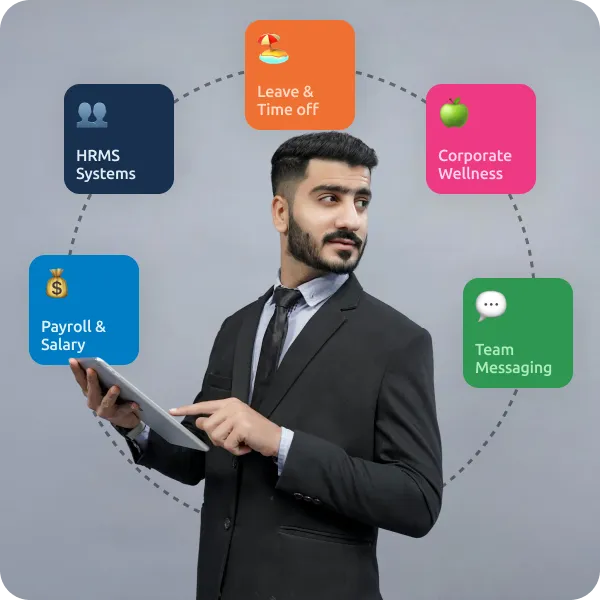
SmartHub integration eliminates SaaS fatigue by unifying payroll, HRMS, leave management, wellness, and communication into one platform - creating everyday engagement touchpoints that employees experience as part of their daily lives
Talk to Sales












Endless Integrations.
One integration layer that brings your entire tech ecosystem together.




.webp)

.webp)
.webp)
.webp)
.webp)
.webp)

.webp)

Integration Hub
Integration Hub
Integration Hub
Integration Hub
Integration Hub
Single Sign-On
Single Sign-On That Connects Everything Securely
Enable enterprise-grade SSO through Okta, Microsoft Azure, ADFS, Ping Identity, and more - giving employees secure, frictionless access to their entire engagement ecosystem with just one click.

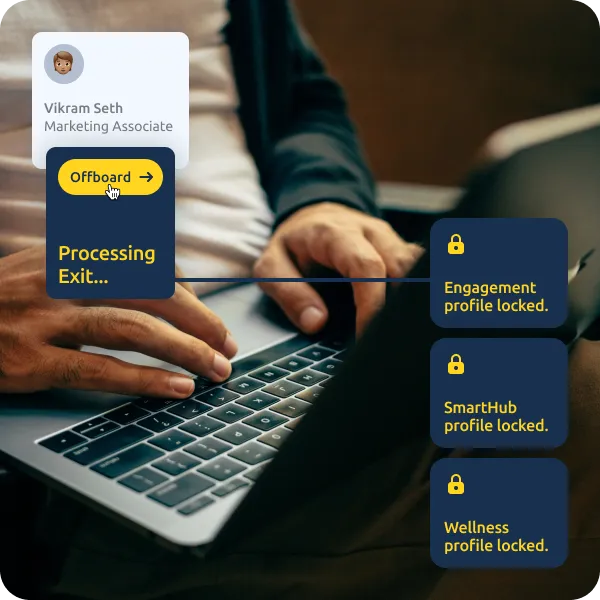
Automatic Access Management
Automatic Access Management Across All Systems
When employees exit, their status automatically updates across all connected platforms. One change in your HRIS instantly revokes access everywhere, eliminating security risks and manual work.
Integration Dashboard
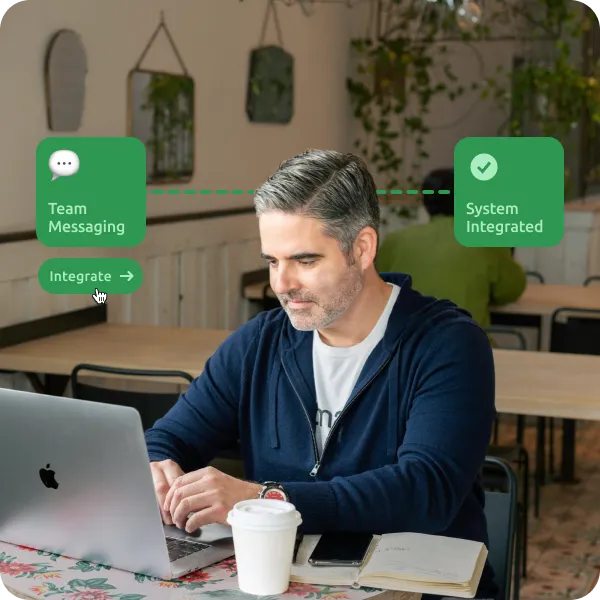
Self-Service Integrations with Zero IT Dependency
Launch integrations in minutes through our intuitive dashboard - complete with step-by-step guides, real-time status tracking, and the flexibility to add new connections as your tech stack evolves.
Tailored Design
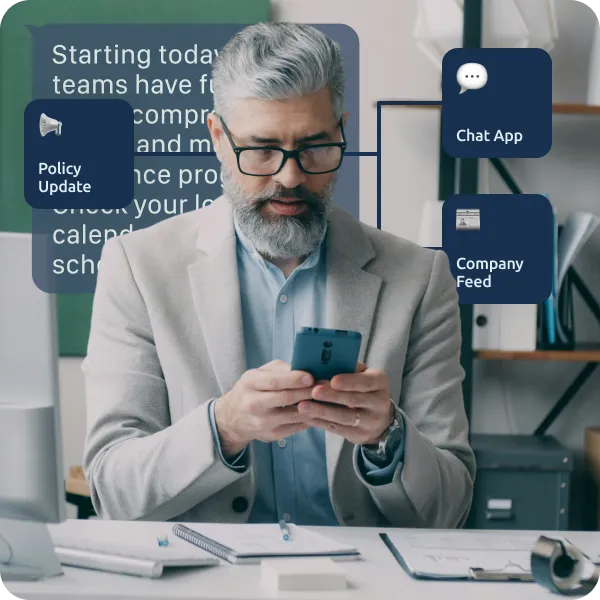
Broadcast Messages Across Slack, Teams, and All Communication Tools
Push leadership updates, company announcements, daily updates, policy changes and more directly into the collaboration platforms your employees use daily.
Wellness Integration
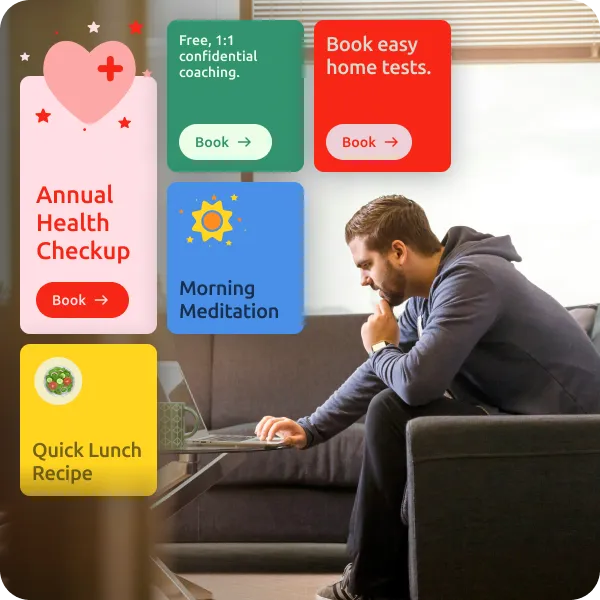
Connect Wellness Benefits for Healthier, More Engaged Employees
Integrate health checkups, OPD services, mental health support, and wellbeing programs into one platform - creating frequent touchpoints that build trust, drive daily engagement, and support workforce resilience.
Business Impact
Integration That Moves Business Metrics
Unified integration creates the consolidated visibility HR needs to connect engagement initiatives to the metrics leadership cares about.
Edenred integrations eliminate fragmented tools and generic experiences - connecting recognition, rewards, savings, wellbeing, and communication into one branded platform that employees actually want to use.
We bind disparate systems together under your employer brand, creating a unified employee experience that drives higher adoption across all your HR initiatives - no more siloed, underutilized programs.
Our Integration creates the consolidated visibility HR needs to prove engagement's ROI through measurable outcomes: retention, productivity, and eNPS improvements that connect directly to business performance.
Our integrations connect with Indian and enterprise HRIS platforms including SAP, Oracle, Darwinbox, Keka, and more - ensuring employees access everything through one platform while HR maintains complete control.




Integrations? We’re glad you asked.
Seamlessly connect with your Payroll, HRMS, Leave Management, Messaging, CRM & other softwares. Customised to your specific use cases.
Talk to Sales


& more
Why choose Edenred?
At Edenred India, we blend innovation, trust, and impact to help organizations unlock value, one reward, one recognition, and one employee at a time
What is HRIS integration and how does it work?
When HRIS integration is implemented, employee data - including names, email addresses, department information, job titles, reporting structures, and employment status - syncs automatically from your core HR system to connected applications. This means when an employee joins your organization, changes roles, or exits, their access and information updates across all integrated platforms without manual intervention. HRIS integration can work through various methods including API connections, SFTP file transfers, or specialized integration platforms that connect multiple systems simultaneously.
Edenred Engagement solution provides HRIS integration with 40+ platforms including SAP SuccessFactors, Workday, Oracle, Darwinbox, Keka, BambooHR, and more. SmartHub acts as the unified intelligence and integration layer that connects your HRIS with recognition, rewards, communication, wellness benefits, and employee savings into one Engagement OS. This eliminates the vendor sprawl and data silos that plague organizations using disconnected point solutions, creating a unified employee experience under your employer brand while giving HR consolidated visibility into how engagement drives measurable outcomes like retention, productivity, and employee NPS.
Which HRIS systems integrate with employee engagement platforms?
In the Indian market specifically, regional HRIS platforms like Darwinbox, Keka, greytHR, and Zoho People have gained significant adoption and require integration support. Global platforms with strong Indian presence including SAP SuccessFactors, Oracle, and ADP also remain critical for multinational organizations operating in India. The challenge for HR leaders is ensuring their engagement platform can connect with whichever HRIS they currently use - and any future systems they might adopt as their organization evolves.
Edenred Engagement's SmartHub addresses this by integrating with both Indian and enterprise HRIS platforms including SAP, Oracle, Darwinbox, and Keka, among 40+ total systems. Rather than forcing organizations to work with limited connectors, SmartHub is architected as an Engagement OS that binds disparate systems together under your employer brand. This integrated approach eliminates the SaaS fatigue that comes from managing multiple HR and enterprise tools across payroll, HRMS, leave management, and wellness, creating a unified employee experience with higher adoption and engagement while giving HR better visibility into impact.
How long does HR system integration take?
HR system integration timelines vary significantly based on complexity, but modern integration platforms have dramatically reduced implementation time. Standard HRIS integrations with platforms like BambooHR, Workday, or SAP SuccessFactors typically complete within 24-48 hours using self-service dashboards and pre-built connectors. Single sign-on (SSO) authentication can often be configured in under an hour. More complex enterprise implementations involving multiple systems, custom data mappings, or legacy platforms may require 2-4 weeks.
The key factors affecting timeline include whether your HRIS offers API access or requires file-based transfers, the complexity of your organizational structure and data fields, whether you need real-time or batch synchronization, and the technical expertise available on your team. Organizations should also factor in testing time to ensure data flows correctly before going live.
Edenred Engagement's SmartHub is designed to minimize implementation time through intuitive self-service configuration. Most integrations require zero technical expertise thanks to step-by-step guides and pre-built connectors for 40+ HRIS platforms. This allows organizations to quickly bind disparate systems together under their employer brand, creating a unified employee experience that drives higher adoption and engagement. The goal is getting your integrated engagement ecosystem live quickly so you can start measuring business impact - higher retention, improved productivity, and employee NPS improvements - from day one rather than waiting months for complex integration projects.
Benefits Of HR System Integration
Employee Benefits
Organizational Benefits
Long-Term Cost Benefits
How do I choose an HR integration platform?
Choosing an HR integration platform requires evaluating both technical capabilities and strategic business impact. Start by assessing which HRIS, payroll, and other systems you currently use and whether the integration platform offers pre-built connectors for your specific technology stack. Consider whether you need real-time API integrations or if scheduled batch transfers are sufficient, and evaluate the platform's security credentials including compliance with GDPR, SOC 2, and regional data protection regulations.
Beyond technical fit, consider implementation complexity and ongoing maintenance. Does the platform require extensive IT resources, or can HR teams manage integrations through self-service dashboards? Evaluate the vendor's track record with organizations similar to yours in size and industry. Most critically, determine whether the integration platform simply moves data between systems or actually creates a unified employee experience that drives adoption and business outcomes.
Edenred Engagement's SmartHub differentiates itself by being architected as an Engagement OS rather than just an integration tool. While SmartHub connects with 40+ HRIS platforms including SAP, Oracle, Darwinbox, and Keka, it goes beyond data transfer to bind disparate systems together under your employer brand into one unified platform. This brings together recognition, rewards, savings, wellbeing, wellness benefits, and communication - creating everyday engagement touchpoints that employees experience as part of their daily lives. Organizations using SmartHub achieve higher adoption and engagement plus consolidated visibility into how engagement drives retention, productivity, and employee NPS, transforming engagement from an HR activity into a measurable driver of business performance.
What are common HR integration challenges?
Organizations face several recurring challenges when integrating HR systems. Data quality and consistency issues arise when different systems use conflicting employee records, duplicate entries, or outdated information. Technical complexity increases when legacy systems lack modern APIs, requiring custom development or file-based workarounds. Security and compliance concerns emerge around data privacy, especially for global organizations navigating GDPR, regional data protection laws, and industry-specific regulations.
Beyond technical challenges, organizational obstacles include resistance to change from teams comfortable with existing workflows, lack of IT resources to manage complex integrations, and difficulty proving ROI when integration projects consume significant time and budget. Perhaps most critically, many organizations successfully integrate systems technically but fail to create unified employee experiences - employees still face multiple logins, disconnected interfaces, and fragmented engagement that defeats the purpose of integration.
Edenred Engagement's SmartHub addresses these challenges through its Engagement OS architecture. Rather than adding another integration point to manage, SmartHub eliminates vendor sprawl and data silos by bringing recognition, rewards, savings, wellbeing, wellness benefits, and communication into one platform. The self-service Integration Dashboard enables setup without extensive IT resources, while pre-built connectors for 40+ HRIS platforms including SAP, Oracle, Darwinbox, and Keka minimize technical complexity. Most importantly, SmartHub creates a unified employee experience under your employer brand rather than just moving data - driving higher adoption and engagement while giving HR consolidated visibility into how engagement impacts retention, productivity, and employee NPS
Does HR integration improve employee engagement?
Yes, HR integration directly and measurably improves employee engagement by eliminating the friction that destroys adoption and creates fragmented experiences. When HR systems don't integrate, employees face SaaS fatigue from managing multiple logins, navigating different interfaces, and searching across disconnected platforms for information This fragmentation leads to low utilization, siloed engagement activities, and generic non-brand centric experiences that fail to drive meaningful engagement despite significant HR investment.
HR integration transforms this by creating seamless employee experiences where recognition, rewards, communication, wellness, and benefits flow together under one employer brand with one login. Employees experience engagement as part of their daily lives rather than episodic programs they must remember to access. This drives higher adoption and engagement because the friction that previously killed participation disappears.
The business impact is measurable. Edenred Engagement's SmartHub demonstrates how integration drives outcomes by binding disparate systems together into one Engagement OS. Organizations using this integrated approach achieve higher retention, improved productivity, and higher employee NPS because engagement stops being an occasional HR activity and becomes embedded in everyday employee experiences. SmartHub connects recognition, rewards, savings, wellbeing, wellness benefits, and communication into one platform, giving HR consolidated visibility into how engagement drives business performance. This proves that integration isn't just technical - it's transformational for employee engagement and business outcomes.
What is self-service HR integration?
Self-service HR integration refers to integration platforms that allow HR teams and administrators to connect systems, configure data flows, and manage integrations independently - without requiring extensive IT resources, technical expertise, or developer involvement. Unlike traditional integration approaches that demand custom coding, API development, or ongoing technical support, self-service integration provides intuitive dashboards, step-by-step guides, and pre-built connectors that enable non-technical users to establish and maintain system connections.
Self-service integration has become critical as organizations manage multiple HR and enterprise tools across payroll, HRMS, leave management, CRM, accounting, ATS, knowledge systems, and wellness platforms. The traditional approach of relying on IT teams for every integration creates bottlenecks, delays program launches, and prevents HR from responding quickly to changing business needs. Self-service capabilities shift control to HR teams, enabling them to launch integrations in hours or days rather than weeks or months.
The business value extends beyond speed. Self-service integration reduces implementation costs by eliminating the need for external consultants or dedicated IT resources. It empowers HR teams to experiment with new connections, adjust data mappings as organizational structures evolve, and troubleshoot issues independently using built-in diagnostic tools and documentation. Most importantly, self-service integration enables HR to maintain agility - adding new systems as the technology stack evolves without creating dependencies on technical teams.
Edenred Engagement's SmartHub exemplifies the self-service integration approach through its Integration Dashboard, which allows organizations to connect disparate systems including payroll, HRMS, leave management, CRM, accounting, ATS, knowledge systems, and wellness platforms into one central hub. This eliminates the app-switching and vendor sprawl that creates SaaS fatigue, bringing together recognition, rewards, savings, wellbeing, wellness benefits, and communication under your employer brand into a single platform. The result is a unified employee experience with higher adoption and engagement, plus better visibility into impact - all achieved without extensive IT involvement or technical complexity.
Frequently Asked Questions


