
Employee Surveys
Keep a pulse on employee sentiment.
Every day, week, month or at moments that matter
Replace once-a-year surveys with always-on listening. Expert templates to capture what drives engagement, real-time dashboards to show where to focus, and action-planning tools to help you respond before small issues become exit interviews.
Talk to Sales














Surveys
Surveys
Surveys
Surveys
Surveys
Custom Survey Builder
Build Fully Customized Surveys Without Limitations on Design or Scope
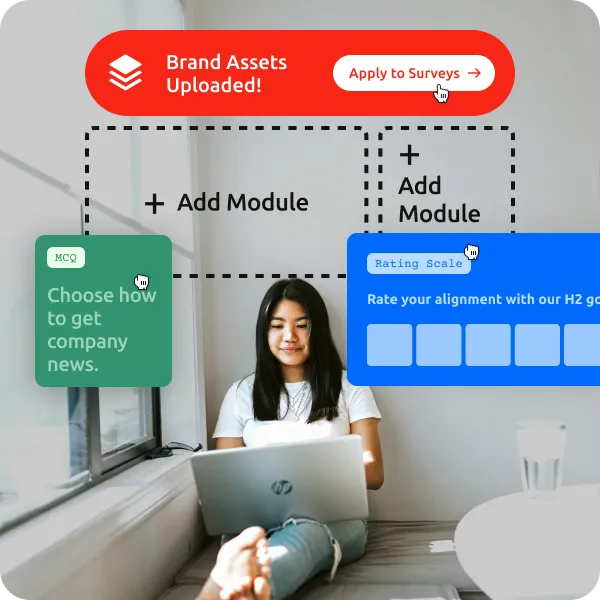
Create unlimited surveys with single choice, multiple choice, rating scales, and open-ended questions. Add your company's branding, customize thank-you messages, and deploy surveys on any topic beyond standard templates.
Pulse Surveys
Take Your Organization's Pulse as Often as You Need
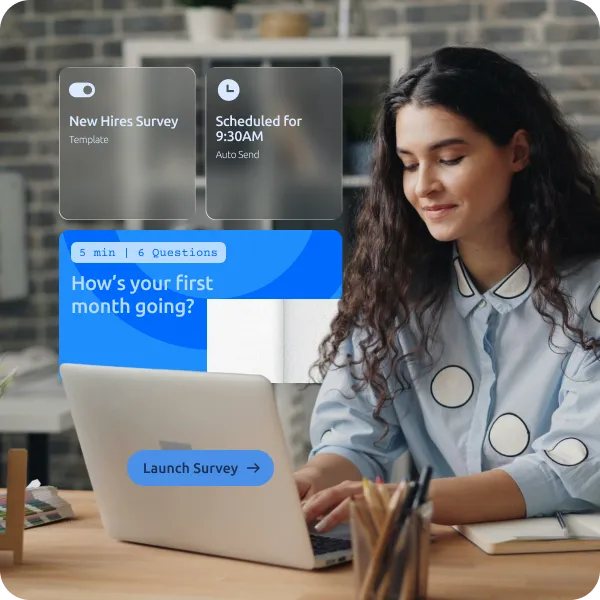
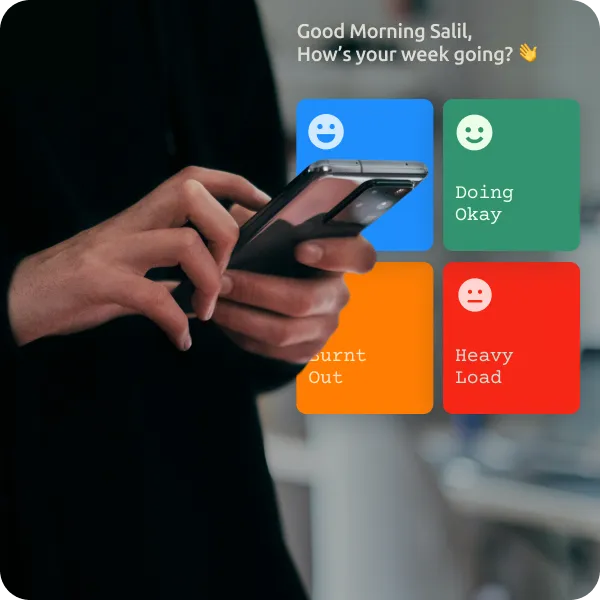
Send quick check-ins weekly, monthly, or after key events. Capture how employees feel right now - not how they felt six months ago - so you can respond while it still matters.
Anonymous Feedback
Anonymous Surveys That Unlock What Employees Really Think
Automatic anonymity protection ensures honest feedback on sensitive topics. Employees share what they really think. You get insights that actually help you improve culture and leadership.

Conditional Logic
Personalized Survey Paths for Managers, New Hires, and Every Role
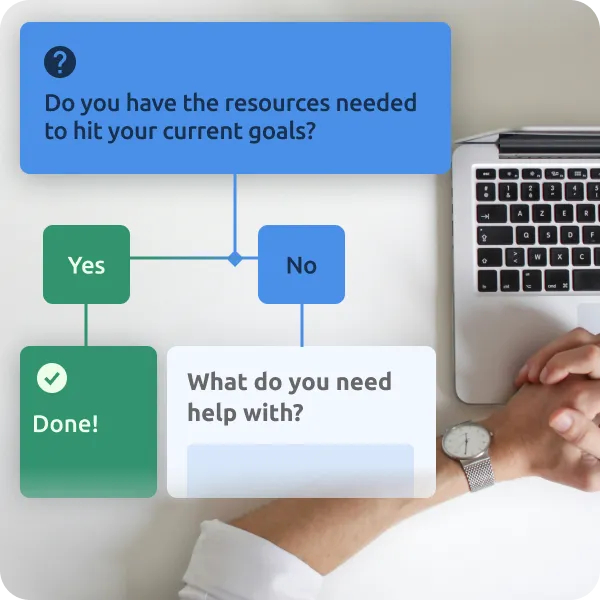
Surveys adapt based on each person's answers. Skip irrelevant questions automatically. Reduce survey length by up to 40% while getting better data from every respondent.
Real-Time Analytics
Turn Hundreds of Responses Into Clear Priorities Instantly
See results instantly, segmented by team, location, or tenure. Identify which groups need support and what's driving their engagement - so you know exactly where to focus your efforts.

Business Impact
How Continuous Listening Transforms Your People Strategy
Higher participation. Earlier intervention. Lower turnover. Smarter resource allocation. Here's how continuous feedback transforms your HR strategy.
Short, targeted pulse surveys generate 2-3x higher completion rates than traditional annual surveys - giving you data that truly represents your workforce, not just the most engaged employees.
Identify engagement gaps, cultural issues, and retention risks as they emerge - not six months later - enabling proactive responses that prevent small problems from becoming resignation letters.
Surface the real reasons employees stay or leave through strategic onboarding and exit surveys, then address root causes before losing more talent to the same preventable issues.
Stop guessing where to invest. Use segmented analytics to identify which teams, locations, or departments need support most - directing budget and attention where it will have the greatest impact on retention and performance.





Integrations? We’re glad you asked.
Seamlessly connect with your HRMS and communications softwares. Customised to your specific use cases.
Talk to Sales


& more
Why choose Edenred?
At Edenred India, we blend innovation, trust, and impact to help organizations unlock value, one reward, one recognition, and one employee at a time
Difference between employee engagement surveys and pulse surveys
The key difference between employee engagement surveys and other feedback tools lies in what they measure and when. Annual employee engagement surveys provide comprehensive baseline measurements across all engagement drivers, while pulse surveys offer quick temperature checks on specific issues. Employee satisfaction surveys focus on contentment, whereas engagement surveys measure commitment and discretionary effort. Exit surveys capture feedback too late to retain talent, while ongoing employee survey questionnaires identify issues while there's still time to intervene.
Edenred Employee Surveys addresses these different needs through a flexible platform that supports multiple survey types. Organizations can deploy comprehensive Engaged Index™ surveys that measure true engagement through four validated indicators, quick pulse surveys to capture real-time sentiment on specific issues, and targeted templates for situations like onboarding, leadership assessment, or cultural initiatives. This multi-modal approach ensures you're measuring what matters most at the right time—whether that's establishing engagement baselines, monitoring trends between annual surveys, or investigating specific concerns as they emerge.
How often should you conduct employee engagement surveys?
Modern best practice combines comprehensive employee engagement surveys (annually or bi-annually) with frequent pulse surveys (monthly or quarterly). Annual surveys establish baselines and track long-term trends across all engagement dimensions. Pulse surveys, using a shorter employee survey questionnaire of 5-15 questions, capture real-time sentiment on specific topics: How is the new leadership transition landing? Are employees feeling supported during a busy season? Is the recent benefits change resonating?
Edenred makes this continuous listening approach practical and sustainable. Edenred’s employee surveys software provides expert templates for targeted deep-dives when you need them - an onboarding survey at 30-60-90 days for new hires, a leadership effectiveness survey after organizational changes, a wellbeing check-in during stressful periods. All surveys include automated reminders and scheduling, real-time analytics, and action-planning frameworks, so you can maintain frequent feedback loops without overwhelming your HR team or creating survey fatigue among employees.
What is a good employee engagement survey response rate?
A good employee engagement survey response rate typically falls between 70-85%, though this varies by organization size, survey frequency, and employee trust in the feedback process. Response rates below 60% should be a yellow flag and anything below 50% should be a red flag - you're not hearing from a significant portion of your workforce, which means your data may not accurately represent employee sentiment. Low response rates often indicate survey fatigue, lack of trust that feedback leads to action, or poorly designed employee survey questionnaires that are too long or confusing.
Several factors dramatically impact response rates. Survey length matters enormously - research shows completion rates drop sharply after 20-25 questions, with every additional question costing you respondents. Timing matters too: avoid busy periods, holidays, and immediately after major organizational disruptions. Most importantly, closing the feedback loop matters: employees who saw previous surveys lead to visible changes are 3-4x more likely to participate in future employee engagement surveys.
Edenred's platform is specifically designed to maximize response rates through multiple mechanisms. Expert templates keep employee survey questionnaires focused and concise (typically 15-20 questions) to avoid fatigue. Mobile-optimized surveys meet employees where they are - on phones during commutes or breaks. Multi-channel distribution (email, platform banners, web links) reaches people through their preferred channels. Automated reminders (customizable frequency) nudge non-respondents without annoying them. Most importantly, built-in action-planning frameworks help you close the feedback loop fast, showing employees their voice drives real change - which dramatically improves participation in your next survey cycle.
Benefits of Employee Surveys
Early Detection of Retention Risks
Data-Driven Resource Allocation
Trust Through Visible Action
How do you analyze employee engagement survey results?
Analyzing employee engagement survey results effectively requires moving beyond overall scores to identify where specific issues exist and which interventions will have the greatest impact. Start by examining overall response rates and completion rates - low numbers may indicate the survey itself is the problem. Then look at overall engagement scores to establish your baseline. But the real insights come from segmentation: which teams, departments, locations, or tenure groups score significantly higher or lower than average?
The most valuable segments for employee survey questionnaire analysis are typically length of service (isolate first-year employees due to "honeymoon effect"), management level (individual contributors vs. managers vs. executives), and team/department (since direct managers have outsized influence on engagement). Look for outliers - teams scoring 15-20 points above or below average often reveal best practices to replicate or urgent issues to address. Cross-tabulate segments to find intersections: new hires in a specific location, individual contributors under particular managers.
Edenred transforms this analytical process from weeks of manual work to minutes of strategic decision-making. Real-time dashboards automatically segment employee engagement survey data by any profile field - department, location, tenure, role level - with visual charts that instantly highlight outliers. Filter and drill down into specific issues: show me all responses about leadership from the sales team, or all wellbeing feedback from employees with less than one year tenure. Export to CSV for deeper analysis in your preferred tools. Most importantly, every survey template includes expert guidance on interpreting results and identifying priority actions, so you move from data to decisions faster.
How do you ensure anonymity in employee engagement surveys?
Ensuring anonymity in employee engagement surveys requires both technical safeguards and transparent communication. Technically, anonymous surveys should not collect identifying information like names or employee IDs, and IP addresses should not be linked to individual responses. When displaying results, data should only be shown for groups with a minimum threshold (typically 5+ respondents) to prevent identification through process of elimination.
However, true anonymity also requires trust. Employees need to believe their responses are actually anonymous, not just technically anonymous but traceable by administrators. This means communicating clearly about how anonymity works, what data is collected, who can see results, and how segmented data will be displayed.
Edenred builds anonymity protection directly into the employee survey questionnaire platform. When you create an employee engagement survey, you choose between three options: fully anonymous (no names collected), optional identification (employees choose whether to include their name), or automatic identification (names collected for follow-up).
What should businesses look for in employee survey software?
When evaluating employee survey software, businesses should prioritize six critical capabilities that separate effective tools from glorified form builders.
First, look for pre-built, expert-validated templates rather than starting from scratch - building effective employee engagement surveys requires expertise in organizational psychology and survey methodology that most HR teams don't have in-house.
Second, ensure the platform offers real-time analytics with segmentation capabilities - overall scores are interesting, but actionable insights come from understanding which teams, locations, or tenure groups need support.
Third, verify the software supports multiple survey types and frequencies - you need both comprehensive annual employee engagement surveys and quick pulse surveys for continuous listening.
Fourth, confirm anonymity protection is built-in, not just promised - look for automatic enforcement of minimum respondent thresholds (5+) before displaying segmented data.
Fifth, evaluate distribution flexibility - the best employee survey software meets employees where they are through email, mobile apps, web links, and platform integrations rather than forcing a single channel.
Finally, and most importantly, assess whether the platform includes action-planning frameworks and guidance - data without direction leads to analysis paralysis and survey fatigue.
Edenred's employee survey software delivers on all six criteria: 20+ expert templates aligned to the Engagement Bridge™ model, real-time dashboards with unlimited segmentation, support for eNPS, pulse surveys, custom surveys and polls, automatic anonymity enforcement, multi-channel distribution (email, SmartHub banners, web links), and built-in best practice guides for every template that help you move from employee survey questionnaire results to visible workplace improvements. The platform also integrates seamlessly with your existing employee data - no separate uploads or logins required - and provides mobile-optimized surveys that employees can complete anywhere, anytime.
Frequently Asked Questions


