
HR Command Center
Complete Control of Your Engagement Strategy. In Your Hands.
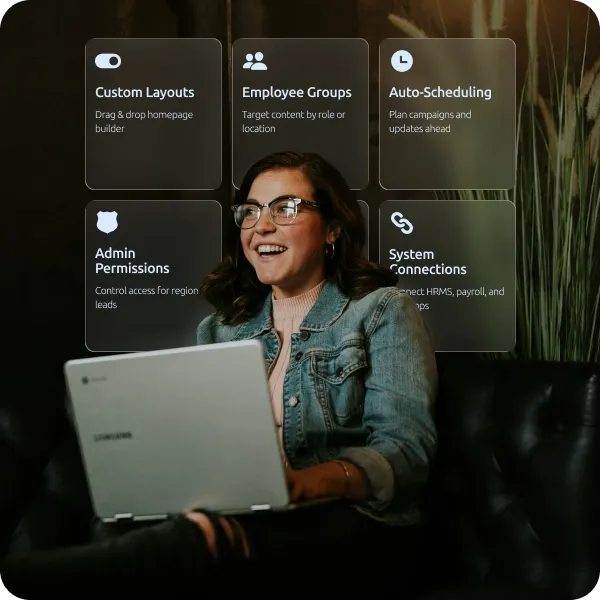
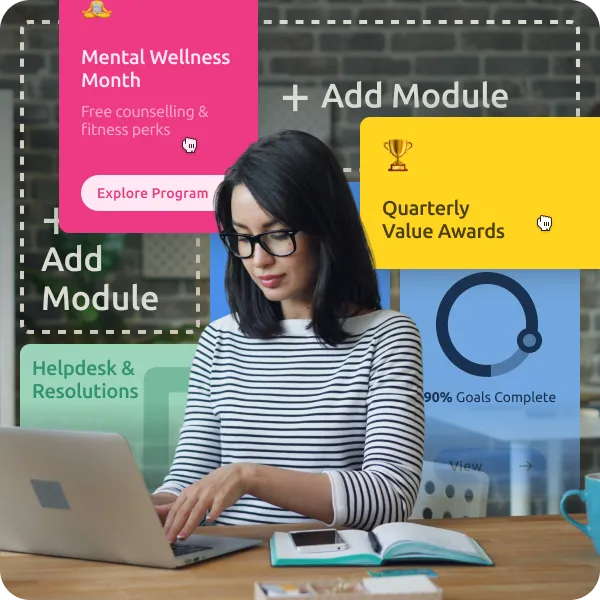
The only engagement command center that adapts to your organization's unique structure. Configure recognition programs, segment communications, control access, and orchestrate employee experiences - all from one infinitely customizable admin dashboard that grows with your needs.
Talk to Sales












Command Center
Command Center
Command Center
Command Center
Command Center
Employee Segmentation
Personalize Experiences for Every Employee Cohort
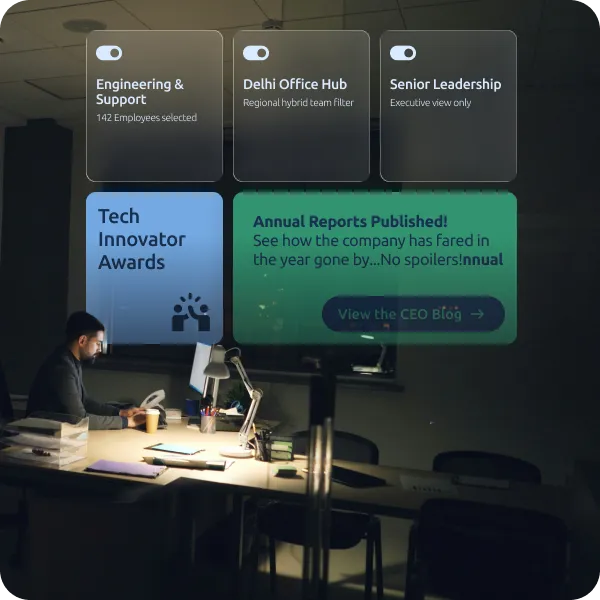
Create unlimited employee segments and orchestrate exactly what each cohort sees - different recognition programs, curated discounts, targeted communications, and relevant wellbeing content - all managed centrally with surgical precision.
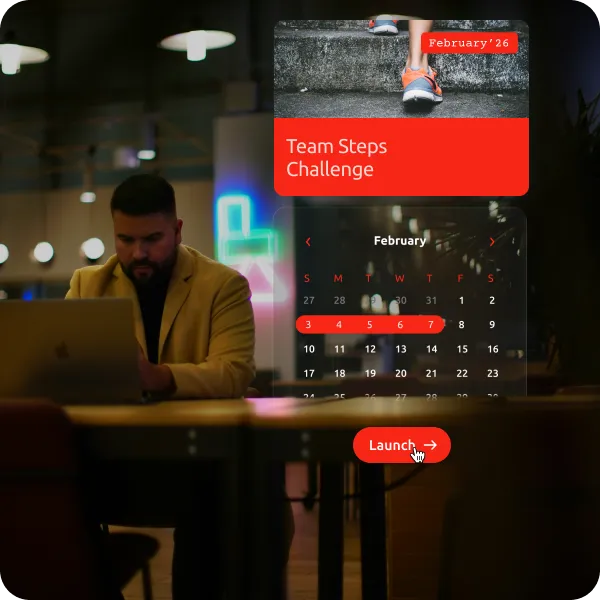
Autonomous Scheduling & Automation
Plan Months Ahead and Let Your Platform Run Itself
Schedule layout changes, seasonal campaigns, and content rotations months in advance using visual calendar tools. Your engagement strategy executes automatically while you focus on strategic initiatives, not manual updates.
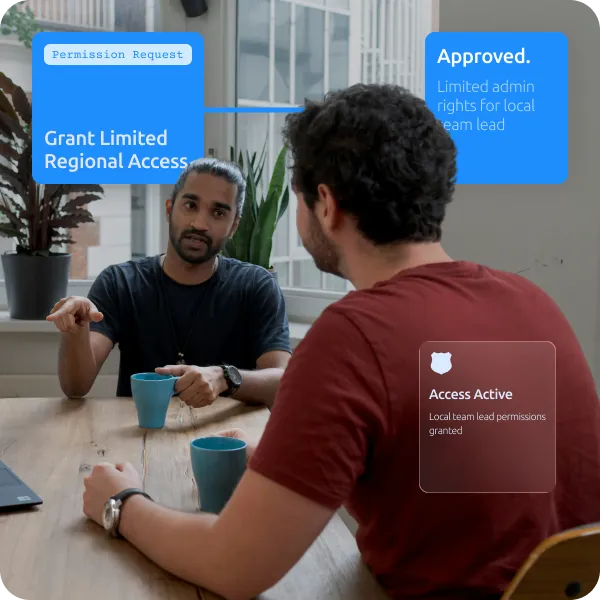
Distributed Control With Centralized Governance
Empower Every Stakeholder Without Losing Oversight
Assign granular permissions that give regional leaders autonomy to run localized programs within your guardrails. Define who approves budgets, launches campaigns, or views analytics - scaling engagement without chaos or compliance risk.
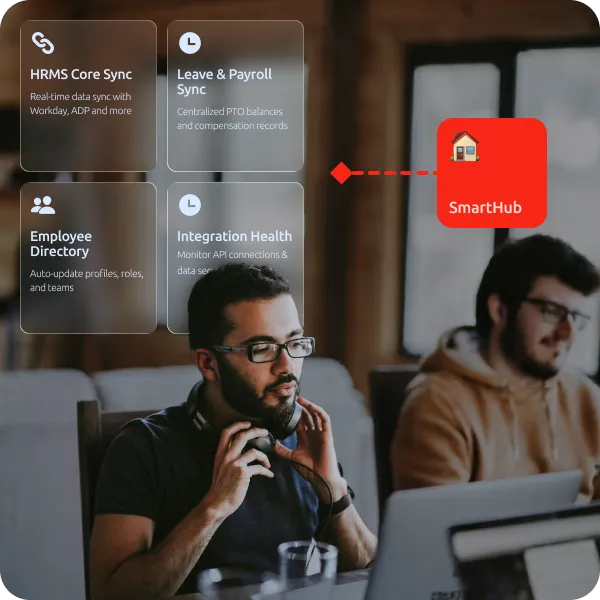
Enterprise Integration Hub
Unify Every HR System Under One Branded Experience
Connect SmartHub with your existing HRMS, payroll, leave management, and enterprise tools through secure integrations. Eliminate data silos, create a single source of truth, and give employees seamless access to everything - while you maintain complete control from one dashboard.
Unified Intelligence Dashboard
Connect Engagement Investments to Business Outcomes You Can Prove
Access consolidated analytics showing adoption, engagement, and ROI across all programs and segments. Drill from company-wide trends to team-level performance - proving how recognition, communications, and wellbeing initiatives drive retention, productivity, and eNPS improvements.
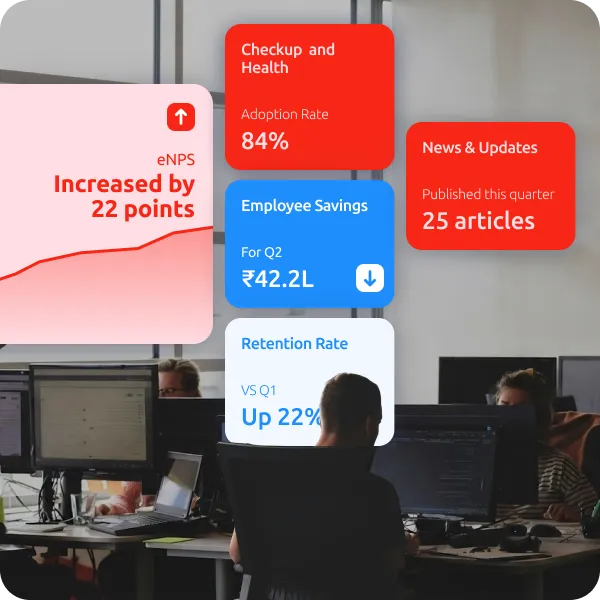
Business Impact
Unified Employee Experience that Drives Business Impact
Track adoption, engagement, and utilization across all systems through one dashboard - transforming HR from cost center to strategic function with data that demonstrates clear connections between experience investments and business outcomes.
Take complete control of your retention strategy. Configure recognition programs, personalize wellbeing content, and segment communications that address why employees actually leave - then prove the impact with data.
Build engagement experiences employees love by controlling every touchpoint. Design programs that resonate, schedule content that stays fresh, and personalize benefits that matter - driving measurable satisfaction improvements.
Fully customized, brand-owned digital experiences reinforce company identity at every touchpoint, strengthening employee connection to organizational culture.
Connect engagement spend directly to business outcomes through unified analytics. Show your CFO and CEO how recognition investments reduce turnover costs, improve productivity, and drive revenue per employee.




Why choose Edenred?
At Edenred India, we blend innovation, trust, and impact to help organizations unlock value, one reward, one recognition, and one employee at a time
What is an HR command center and why do organizations need one?
Organizations need HR command centers because managing engagement through fragmented vendors creates critical problems. HR leaders report rising SaaS fatigue from operating multiple tools across payroll, HRMS, recognition, wellness, and benefits. This fragmentation leads to low utilization, siloed engagement activities, and generic non-branded experiences. More importantly, when engagement data is scattered across separate systems, HR cannot prove ROI or connect initiatives to business outcomes like retention and productivity.
An effective HR command center solves this by unifying all engagement tools under one platform that HR controls completely. Teams can launch programs in hours instead of months, personalize experiences for different employee segments, allocate budgets with financial precision, and access consolidated analytics that prove engagement's impact on retention, employee NPS, and business performance. This transforms HR from program administrators dependent on vendors into strategic leaders who own their engagement platform and drive measurable business results.
What are the benefits of giving HR teams full control over employee engagement platforms?
Full control also enables true personalization at scale. HR can create unlimited employee segments by department, location, role, or performance tier, then orchestrate exactly what each cohort sees - different recognition programs, curated benefits, targeted communications, and relevant wellbeing content. This precision drives significantly higher adoption rates. Organizations with full platform control achieve 50-85% utilization compared to industry averages of 32-38% because HR can configure experiences employees actually value rather than accepting generic vendor defaults.
Most importantly, complete control enables HR to prove ROI through unified analytics. When all engagement initiatives operate on one platform HR manages, consolidated dashboards can connect recognition spend, communication engagement, and wellbeing participation directly to business outcomes like retention improvements, productivity gains, and employee NPS increases. This data-driven approach transforms engagement from an HR activity measured by participation metrics into a strategic driver of business performance measured by outcomes leadership actually cares about. HR shifts from cost center to growth driver when they control the platform that proves engagement's business impact.
How can HR reduce vendor dependency and take ownership of engagement programs?
HR teams reduce vendor dependency by implementing platforms that prioritize self-service configuration over vendor-managed implementations. Traditional engagement platforms require submitting support tickets for basic changes like adjusting recognition budgets, modifying approval workflows, or segmenting communications. This creates bottlenecks where HR waits weeks for vendors to implement changes while business problems compound. The solution is adopting platforms built with no-code administration tools that put configuration power directly in HR's hands.
Modern HR command centers provide drag-and-drop builders for designing branded homepages, visual interfaces for creating employee segments, calendar-based schedulers for planning content months ahead, and intuitive controls for allocating budgets across any organizational dimension. HR teams can configure any program structure, personalize for any employee group, and launch initiatives instantly without technical resources or vendor involvement. This autonomy is critical because engagement challenges don't wait for vendor implementation cycles.
Taking ownership also means unifying fragmented systems under one platform HR controls. Most organizations manage engagement through multiple vendors across recognition, wellness, surveys, and benefits, creating episodic programs employees experience occasionally rather than consistently. By consolidating these initiatives into one integrated platform with centralized administration, HR eliminates vendor sprawl while creating everyday engagement touchpoints employees interact with daily. The unified analytics prove how these initiatives collectively drive retention, productivity, and employee NPS improvements - giving HR the data needed to demonstrate strategic value and justify continued investment without depending on vendors to stitch together fragmented reports.
How can HR reduce SaaS fatigue while improving employee engagement?
SaaS fatigue has become a critical challenge for HR leaders managing engagement across multiple vendors. Most enterprises operate numerous HR and enterprise tools spanning payroll, HRMS, leave management, CRM, accounting, ATS, knowledge systems, and wellness platforms. This proliferation leads to too many tools, insufficient employee awareness, low utilization rates, and siloed engagement activities. HR teams spend more time managing vendor relationships and navigating separate dashboards than driving strategic engagement initiatives. Employees experience generic, non-brand-centric interactions across disconnected platforms that feel like vendor products rather than employer-sponsored benefits.
The solution is consolidating engagement initiatives onto one unified platform that eliminates vendor sprawl while creating integrated employee experiences. Rather than managing separate vendors for recognition, rewards, savings, wellbeing, wellness benefits, and communications, organizations should implement platforms that bind these disparate systems together under their employer brand into a single experience. This architectural approach creates unified employee experiences, higher adoption and engagement, better visibility into impact, and stronger employer brand consistency.
Consolidation delivers measurable benefits beyond operational efficiency. When employees access all engagement initiatives through one branded platform with single sign-on, utilization rates increase dramatically - from industry averages of 32-38% to 50-85% - because the experience feels cohesive rather than fragmented. HR gains centralized visibility into how recognition, communications, savings, and wellbeing initiatives collectively drive business outcomes, replacing the impossible task of stitching together reports from multiple vendors. Most importantly, unified platforms enable proving ROI through consolidated analytics that connect engagement investments to retention improvements, productivity gains, and employee NPS increases. This transforms SaaS fatigue from operational burden into strategic advantage when the right platform eliminates vendor sprawl while improving engagement effectiveness.
What is the difference between episodic engagement and everyday engagement?
Episodic engagement refers to programs designed around specific calendar moments - employee engagement days, recognition weeks, wellness campaigns, annual surveys, and periodic culture initiatives. These programs operate independently and employees experience them occasionally rather than consistently. While episodic programs generate short-term participation spikes, they fail to create sustained behavioral change because employees don't interact with engagement initiatives as part of their regular workflow.
Everyday engagement fundamentally changes this approach by embedding engagement into employees' daily lives through continuous touchpoints. Instead of waiting for annual recognition events, employees receive peer appreciation in real-time. Rather than accessing wellness programs during designated campaign weeks, they engage with wellbeing content regularly. Instead of learning about benefits during onboarding and forgetting them, they interact with savings and discounts as part of everyday purchases. This continuous interaction creates habits and sustained engagement rather than temporary participation.
The business impact difference is substantial. Episodic programs typically achieve industry-average utilization rates of 32-38%, while everyday engagement models drive adoption rates of 50-85% because employees find continuous value rather than occasional touchpoints. Organizations implementing everyday engagement see measurable improvements including 18% attrition reduction and +22 point eNPS increases because engagement becomes woven into daily employee experiences rather than treated as separate HR initiatives. When engagement must be experienced daily, not occasionally, it transforms from program participation into cultural behavior that drives retention, productivity, and business performance.
How does employee segmentation improve engagement program effectiveness?
Employee segmentation transforms generic engagement programs into personalized experiences that drive measurable results. Without segmentation, HR delivers one-size-fits-all programs that attempt to serve everyone but resonate with no one. A software engineer in Bangalore has fundamentally different needs than a manufacturing supervisor in Pune, yet most platforms broadcast the same content to all employees regardless of role, location, or tenure.
Effective segmentation enables HR to create unlimited employee cohorts based on department, location, tenure, role, performance tier, or custom HRMS attributes. Each segment receives completely different experiences: targeted recognition programs, curated discount offers relevant to their geography, communications addressing their specific challenges, and wellbeing content matched to their needs. This precision eliminates noise while maximizing relevance.
The business impact is substantial. Platform utilization rates increase dramatically when employees see content designed specifically for them rather than generic broadcasts. More importantly, segmentation enables HR to prove which initiatives drive retention and productivity for specific groups through cohort-level analytics. This transforms segmentation from a personalization feature into a strategic tool for optimizing engagement investments and driving measurable business outcome.
What features should HR look for in an employee engagement administration platform?
HR teams should prioritize platforms that deliver complete administrative control without technical barriers. Essential features include no-code design tools that let HR build branded engagement experiences through drag-and-drop interfaces rather than requiring developers. Look for unlimited segmentation capabilities that enable creating employee cohorts by any dimension - department, location, tenure, role, performance tier - then orchestrating personalized content, programs, and benefits for each group from one centralized dashboard.
Autonomous scheduling is critical for strategic planning. The platform should provide visual calendar tools for scheduling layout changes, seasonal campaigns, and content rotations months in advance, with automatic execution that eliminates manual updates. Equally important is granular role-based access control that lets HR assign permissions defining exactly who can approve rewards, launch communications, view analytics, or modify programs - enabling distributed control with centralized governance as organizations scale.
Financial precision matters when proving ROI. Platforms should offer budget allocation across any dimension with real-time spend monitoring, alerts, limits enforcement, and instant reallocation capabilities. Most critically, look for unified analytics dashboards that consolidate data across all engagement pillars - recognition, communications, surveys, savings, wellbeing - showing adoption, engagement, and business impact by segment. The platform should connect engagement investments directly to retention improvements, productivity gains, and employee NPS increases, giving HR the metrics needed to prove strategic value to CFOs and CEOs. Integration capabilities that connect with existing HRMS, payroll, and enterprise systems complete the picture by eliminating data silos while creating seamless employee experiences under your employer brand.
Why are platform integrations critical for employee engagement success?
Platform integrations are critical because fragmented systems destroy both employee experience and HR's ability to prove impact. Most enterprises operate multiple tools across payroll, HRMS, leave management, wellness, and benefits. When these don't integrate, employees navigate multiple logins and disconnected portals, creating low utilization and siloed engagement activities.
For HR, lack of integration creates data silos that make proving ROI impossible. When engagement data lives in separate systems - recognition in one platform, wellness in another, surveys in a third - HR cannot understand how initiatives work together to influence behavior. Fragmented systems dilute engagement and destroy visibility, making it impossible to connect initiatives to retention, productivity, and employee NPS.
Effective integration solves both challenges. By connecting disparate systems under one employer brand, organizations create unified employee experiences with single sign-on access. This eliminates app-switching and brings every tool onto a single page, driving higher adoption. For HR, integration provides consolidated visibility across all touchpoints, proving how recognition, communications, savings, and wellbeing collectively drive retention improvements, productivity gains, and employee NPS increases - transforming disconnected vendor programs into an integrated strategy that delivers measurable business performance.
Frequently Asked Questions


